
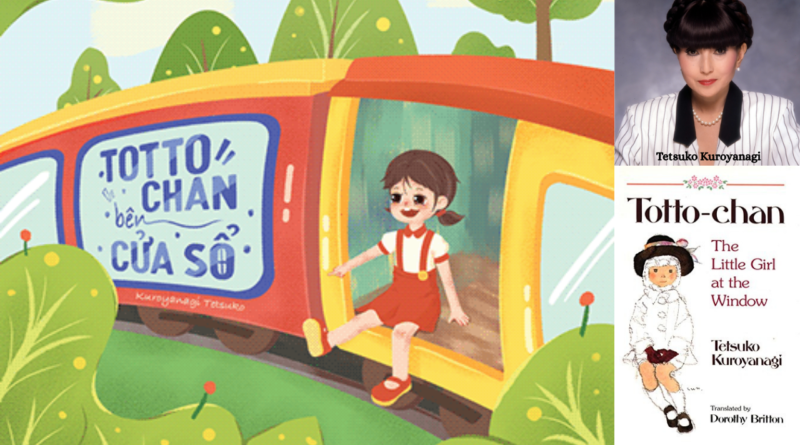
Rediscovering the Magic of Totto-chan
Journey into the life of Tetsuko Kuroyanagi and the unconventional school that transformed her future. Discover why Totto-chan: The Little Girl at the Window remains a record-breaking global bestseller and a vital blueprint for nurturing the freedom, curiosity, and potential of every child.The story of Tetsuko Kuroyanagi is as much a tale of a transformative education as it is the biography of one of Japan’s most beloved public figures. Known affectionately by her childhood nickname, Totto-chan, Kuroyanagi was born in Tokyo in 1933. Her father was a violinist and concertmaster, providing an artistic backdrop to her early years. However, young Tetsuko did not fit the mold of the traditional Japanese student. Her boundless energy and natural curiosity often clashed with the rigid expectations of the public school system, leading to her expulsion from elementary school at a very young age. Her mother, realizing that her daughter simply needed a place where her freedom of expression was valued, found Tomoe Gakuen, a small, unconventional school founded by the visionary educator Sosaku Kobayashi.
Kuroyanagi’s journey eventually led her to become the first television actress contracted to NHK in 1953. She became a household name in Japan, most notably for her talk show Tetsuko’s Room (Tetsuko no Heya), which has aired for nearly five decades and holds a Guinness World Record for the most broadcasts by the same host. Yet, despite her immense success in entertainment, her heart remained tethered to the children of the world. In 1984, she became the first person from Asia to be appointed a UNICEF Goodwill Ambassador. This transition from a television personality to a global educationist and humanitarian was fueled by her own childhood experiences at Tomoe Gakuen. She began writing about her school days after hearing that many children were refusing to attend school, hoping to share the joy and freedom she had once known.
Introducing a Masterpiece: Totto-chan, the Little Girl at the Window
Published in 1981, Totto-chan, the Little Girl at the Window (Madogiwa no Totto-chan) is an autobiographical memoir that quickly became the bestselling book in Japanese history, with over 25 million copies sold worldwide. The title itself is a poignant metaphor; in Japanese, the phrase “the little girl at the window” was often used to describe those society considered failures or outcasts—those literally standing on the periphery.
The book is set against the backdrop of World War II, a time of growing austerity and danger in Japan. However, through Totto-chan’s eyes, the setting is not one of fear, but of discovery. The school itself was remarkably unique, featuring old railroad cars used as classrooms. The narrative style is warm and experiential, focusing on the day-to-day wonders of a school where children were treated as individuals with immense potential rather than uniform products of a system.
The Visionary Philosophy of Sosaku Kobayashi
At the heart of the book are the central ideas of Headmaster Sosaku Kobayashi. His philosophy was a radical critique of traditional, teacher-centered schooling. Kobayashi believed that children possess a natural curiosity and a drive to learn that should be nurtured, not suppressed by rigid discipline. He advocated for freedom of expression and understood that a child’s emotional well-being was just as important as their academic progress.
Kobayashi’s approach emphasized joy in education over fear. He sought to develop both the minds and bodies of his pupils, ensuring they led happy lives even as the world around them descended into the chaos of war. He was particularly committed to inclusivity, showing deep concern for students with physical disabilities and emphasizing that every child was “remarkable”. For Kobayashi, the role of a teacher was not to dictate, but to listen and facilitate.
Lessons from the Railroad Classrooms
The book is filled with vivid, memorable incidents that illustrate this philosophy. One of the most famous stories is Totto-chan’s first meeting with Mr. Kobayashi. Upon arriving at the school, the headmaster sat and listened to her talk for four straight hours. To a child who had been expelled for being “distracting,” this act of patient, respectful listening was life-changing. It established a bond of trust and mutual respect that defined her entire educational experience.
Another powerful narrative involves the diversity of the student body. Totto-chan became best friends with a boy named Yasuaki-chan, who had polio. At Tomoe Gakuen, physical differences were not barriers but opportunities for empathy and shared growth. In another instance, Kobayashi encouraged the children to learn English from a classmate who had been raised in America—this was a bold act of educational defiance, as the Japanese government at the time had restricted the use of the “enemy’s” language during the war.
Even the simple act of eating was an educational opportunity. Totto-chan’s mother had to meet Kobayashi’s requirement for a balanced lunch containing “something from the ocean and something from the hills”. This was a creative way to teach nutrition and appreciation for nature, even as food became scarce.
Powerful Quotes and Their Significance
The wisdom of the book is often distilled into simple, profound observations. While the sources do not provide exhaustive direct quotes, they highlight the themes that resonate throughout the text:
- “You’re really a good girl, you know.” This was a phrase Mr. Kobayashi often repeated to Totto-chan. Its significance cannot be overstated; for a child labeled a “failure” by the system, this constant affirmation of her inherent goodness was the foundation of her self-esteem.
- The importance of “something from the ocean and something from the hills.” This reflects Kobayashi’s belief in the integration of life and learning. Education wasn’t just in books; it was in the food they ate and the world they inhabited.
- The metaphor of the “window.” By reclaiming a term meant to marginalize, the book suggests that those who don’t fit in are often the ones with the most unique views of the world.
Why Totto-chan Matters Today
Decades after its publication, Totto-chan remains incredibly relevant. Many modern education systems still struggle with the very issues Kobayashi sought to reform: rote learning, immense exam pressure, and a lack of creative freedom. In the context of modern reforms, such as India’s National Education Policy (NEP) 2020 (which is external to the provided sources), there is a renewed global focus on experiential learning and child-centered approaches—concepts that were the very bedrock of Tomoe Gakuen in the 1940s.
For today’s educators, parents, and policy thinkers, the book serves as a reminder that the environment in which a child learns is as important as the curriculum itself. It challenges the idea that “troublesome” children are failures, suggesting instead that they may simply be in the wrong environment.
Key Insights and Reflections
The major takeaway from Kuroyanagi’s memoir is that children learn best when they are respected and engaged. The emotional connection between teacher and student, the freedom to explore interests, and an environment that celebrates individuality are the true catalysts for growth.
For Teachers: The book asks you to rethink your classroom. Is it a place of “quiet discipline,” or is it a place where a child feels heard? Can you listen to a student for four hours if that’s what they need to feel valued? For Parents: Totto-chan offers a lesson in advocacy. Totto-chan’s mother didn’t scold her for being expelled; she sought out a place where her daughter’s unique spirit could thrive.
Conclusion
Totto-chan’s time at Tomoe Gakuen ended when the school was bombed during the war and never rebuilt. Yet, the school lived on through the millions of readers who have been touched by this story. Tetsuko Kuroyanagi’s memoir is more than just a book; it is a testament to the power of a single educator to change the trajectory of a child’s life. It leaves us with a haunting, yet hopeful question: how many “little girls at the window” are we losing today because we haven’t built enough railroad cars for them to learn in? Every educator and parent should read this book, not as a history of a lost school, but as a blueprint for a more compassionate, joyful future for our children.