
When a Beehive Became a Classroom: Art, Geometry, and Poetry Come Alive
Dr.Taruna Mathur
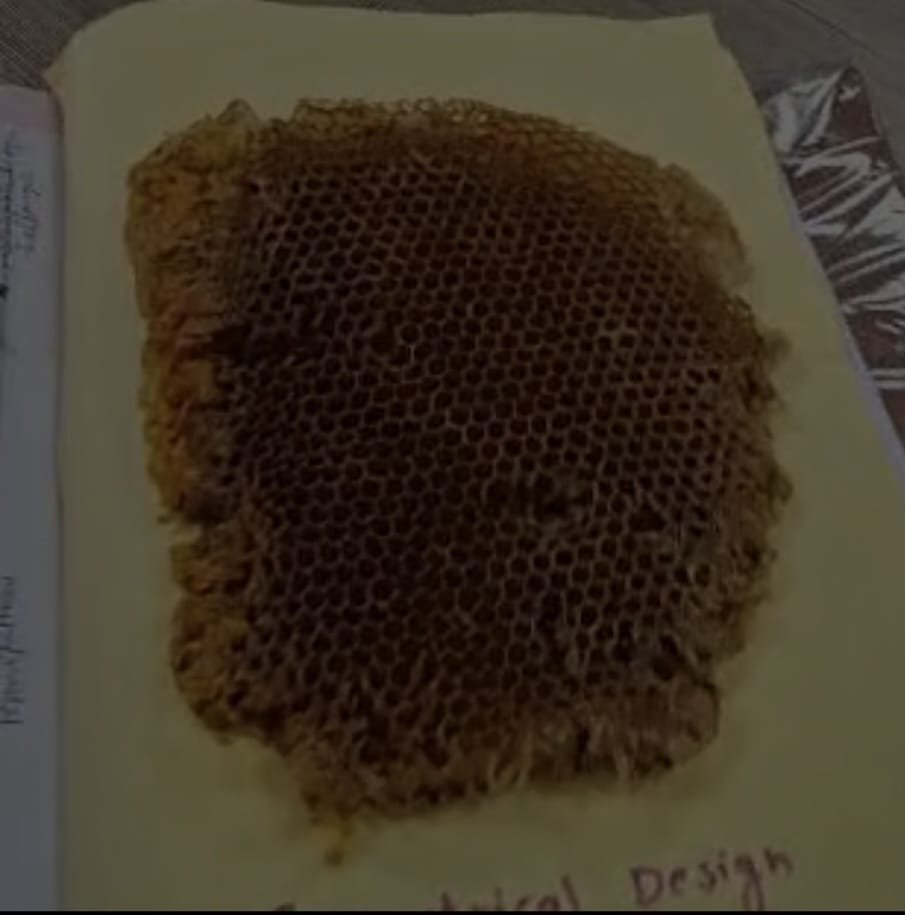

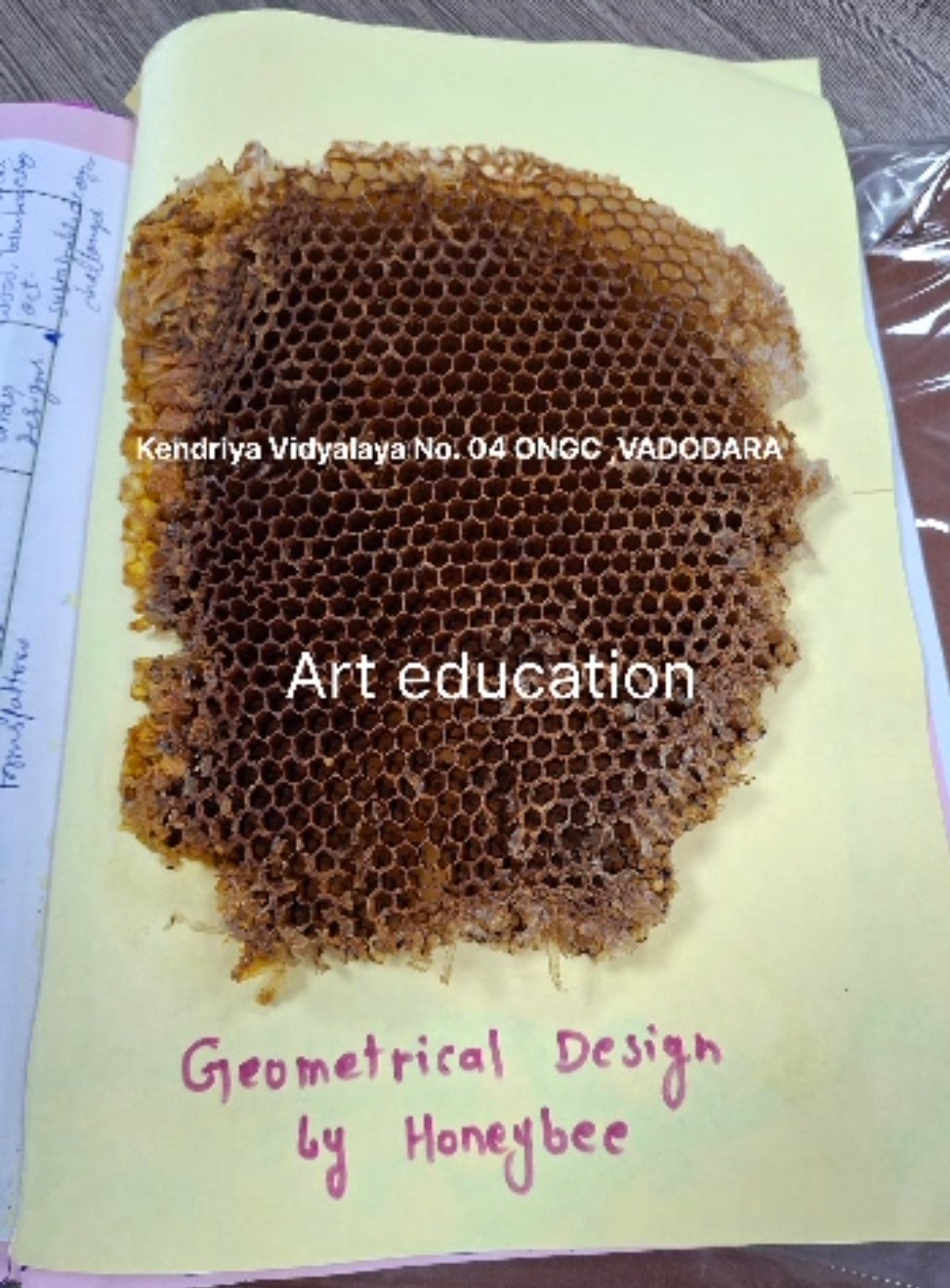
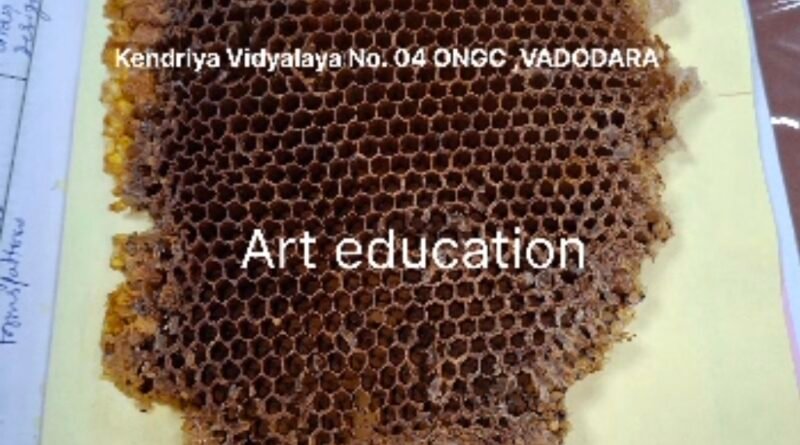
A beehive at KV ONGC Vadodara inspired a unique NEP 2020-based lesson blending art, geometry, and poetry, showcasing the power of experiential and multidisciplinary learning.In a buzzing art class at Kendriya Vidyalaya No. 4 ONGC Vadodara, Class 9 students transformed a simple, real-life discovery—a wild honeybee hive on the school premises—into an extraordinary learning experience. What began as curiosity soon unfolded into a powerful example of how education, when rooted in observation and creativity, becomes truly meaningful.
Aligned with the vision of the National Education Policy 2020, the session seamlessly blended art, mathematics, environmental awareness, and language, turning the classroom into a space of exploration and wonder.
The hive became the centrepiece of the lesson. Students observed its intricate structure with fascination—the perfect alignment of hexagons, the subtle curves, and the rhythm of repetition. What might otherwise have been a fleeting sight was now a “living textbook.” The honeycomb revealed the elegance of geometry in nature: hexagons fitting together without gaps, circles forming cells, and patterns suggesting symmetry and efficiency.
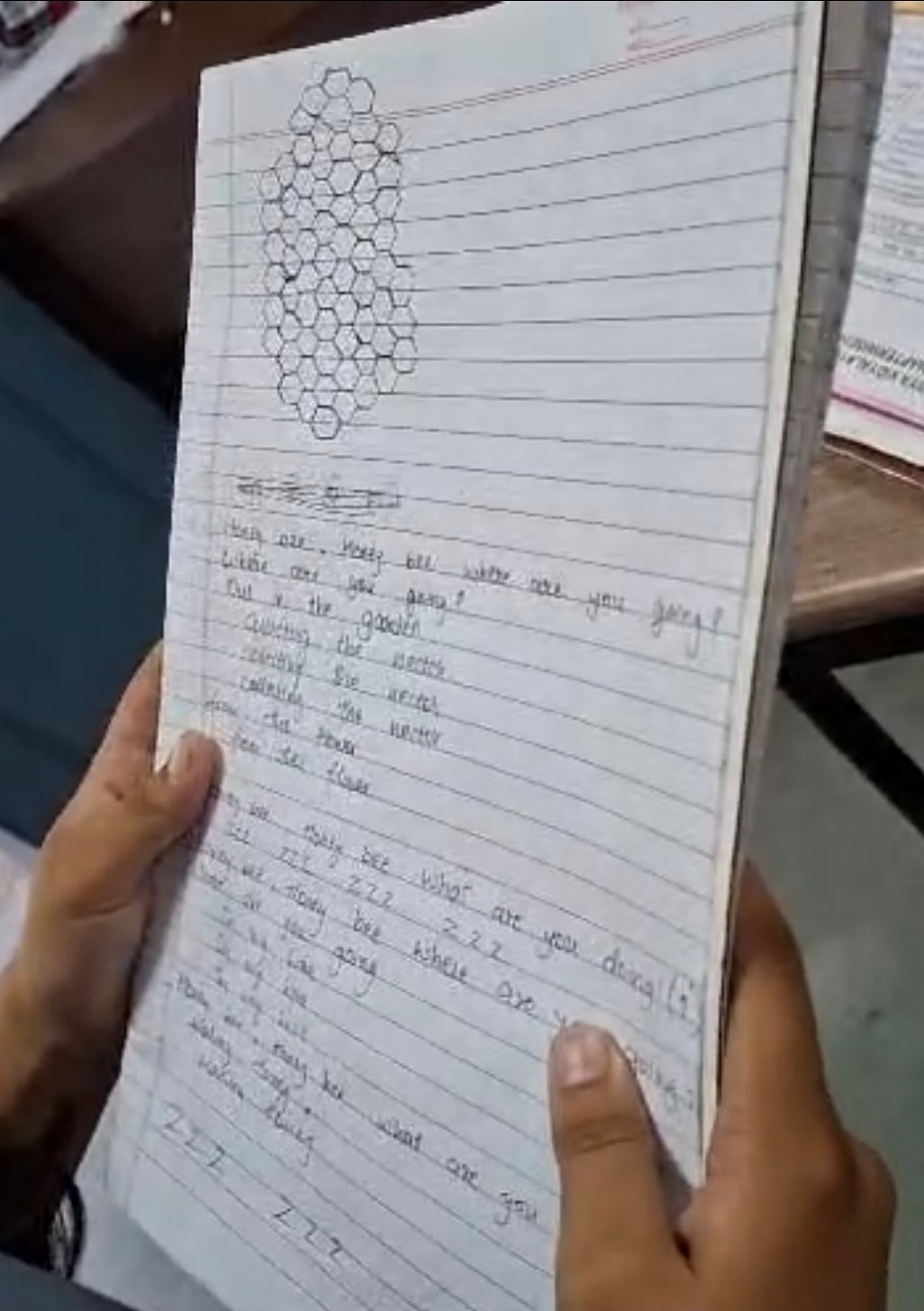
Guided to look deeper, students began sketching what they saw. Sketchpads filled with careful lines as they tried to replicate the precision of the honeycomb lattice. In that quiet concentration, geometry ceased to be abstract. Concepts like tessellation and structural efficiency emerged naturally, not from a formula on the board, but from the living world around them.
And then came the most delightful turn.
Inspired by their drawings, students were invited into an impromptu poetry exercise. What followed was nothing short of magical. Words began to flow—tentatively at first, then with growing confidence. The geometry they had just studied transformed into imagery, rhythm, and emotion.
One student wrote:
“Hexagons hug in golden delight,
Bees dance in circles, day and night,
Spirals sweeten the hive’s grand art,
Geometry’s buzz straight from the heart.”
Another imagined bees as “tiny architects,” crafting “perfect puzzles of six-sided homes.” The classroom, once focused on lines and shapes, now echoed with laughter, applause, and the courage of young voices discovering expression.
What made this session remarkable was not just its creativity, but its alignment with the deeper educational philosophy of our time. The National Education Policy 2020 emphasizes experiential learning, integration across disciplines, and the nurturing of critical and creative thinking. This single activity embodied all three—without the need for elaborate resources.
Here, learning was not delivered; it was discovered. Mathematics met art, observation met imagination, and knowledge transformed into expression. Students collaborated, reflected, and created—developing not just academic understanding but confidence and curiosity.
Perhaps the most powerful outcome was captured in a student’s simple reflection:
“Art class felt like a beehive—busy, beautiful, and full of sweet surprises.”
Such moments remind us that education does not always require sophisticated tools or structured environments. Sometimes, all it needs is attention to the world around us—a hive on a tree, a pattern waiting to be noticed, a question waiting to be asked.
At Kendriya Vidyalaya ONGC Vadodara, this session demonstrated that when teaching draws from everyday experiences, it becomes alive. It nurtures not only skills but also a deeper appreciation for the interconnectedness of knowledge.
In the end, the beehive was more than a subject. It was a bridge—linking science with art, logic with imagination, and learning with joyA beehive at KV ONGC Vadodara inspired a unique NEP 2020-based lesson blending art, geometry, and poetry, showcasing the power of experiential and multidisciplinary learning.