
CISCE Examination Results for 2024 reveal a 99.47% pass rate for ICSE students and a 98.19% pass rate for ISC students.
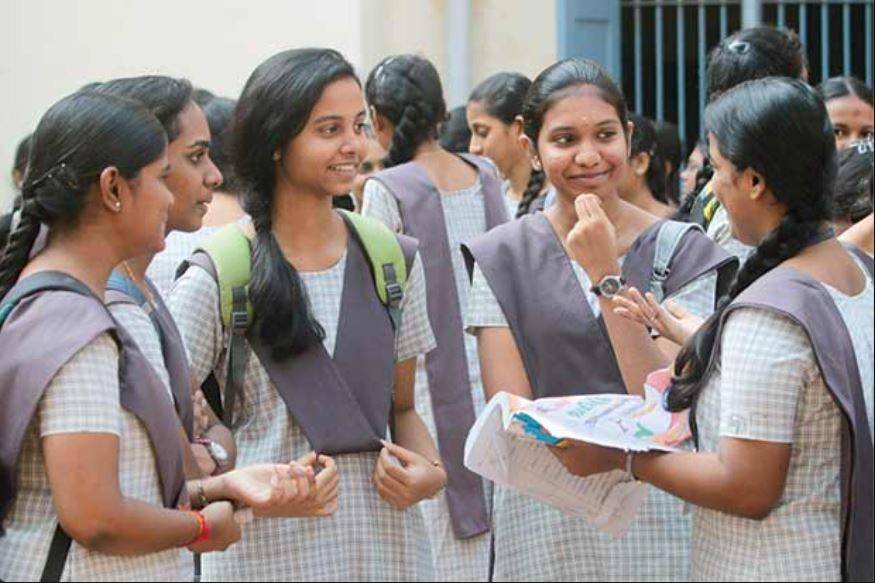
The Council for the Indian School Certificate Examinations (CISCE) has announced the results for the Indian School Certificate (ISC) and Indian Certificate of Secondary Education (ICSE) exams. Students can view their scores on the official website cisce.org. The pass percentages for ICSE and ISC are 99.47% and 98.19%, respectively. In ICSE, out of 2,43,617 students, 2,42,328 passed, with 1,30,506 boys and 1,13,111 girls passing. Boys’ pass percentage is 53.57%, while girls’ is 46.43%. Similarly, in ISC, 99,901 students appeared, with 98,088 passing, including 52,765 boys and 47,136 girls. Boys’ pass percentage is 52.82%, while girls’ is 47.18%.
In ICSE, 2695 schools participated, with 82.48% achieving a 100% pass percentage, while in ISC, 66.18% of 1366 schools achieved the same. Girls outperformed boys in ICSE, scoring 99.65% compared to boys’ 99.31%, and in ISC with 98.92% against boys’ 97.53%.
The top-performing schools internationally in class 10 are from Indonesia, Singapore, and Dubai, while in class 12, they are from Singapore and Dubai. The ICSE examination included 60 written subjects, and the ISC had 47 written subjects. ICSE exams took place from February 21 to March 28 for 18 days, and ISC exams ran from February 12 to April 4 for 28 days.
In 2023, the pass percentages were 98.94% for ICSE and 96.93% for ISC. Last year, girls performed better in both classes. ISC saw the South region with the highest pass percentage at 99.20%, followed by the West at 98.34%. In ICSE, the West region secured the highest pass percentage at 99.81%.
Unlike CBSE, CISCE gave equal weightage to both terms’ theory papers for the final results of classes 10 and 12. While CBSE assigned 30% weightage to Term 1 and 70% to Term 2, CISCE considered both terms equally. Gerry Arathoon, Chief Executive and Secretary of CISCE, stated that they had announced this approach from the beginning, leaving no room for doubt. CBSE’s decision was based on students’ feedback that they couldn’t perform their best in Term 1 exams due to the new objective pattern.