
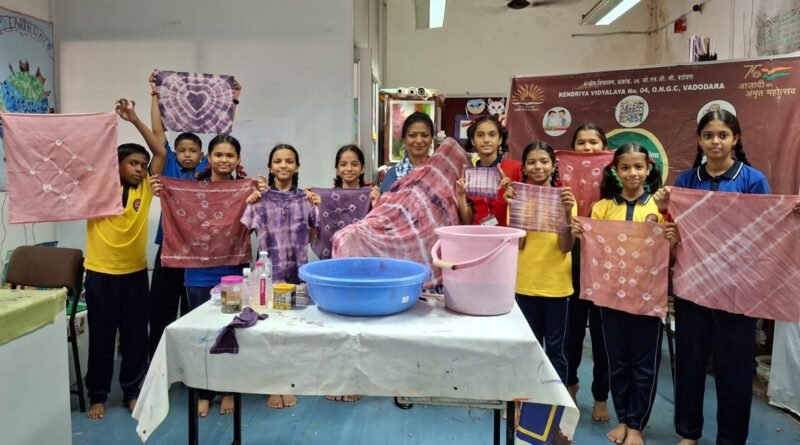
The implementation of the 10 Days Bagless Programme under the National Education Policy 2020
Dr.Taruna Mathur
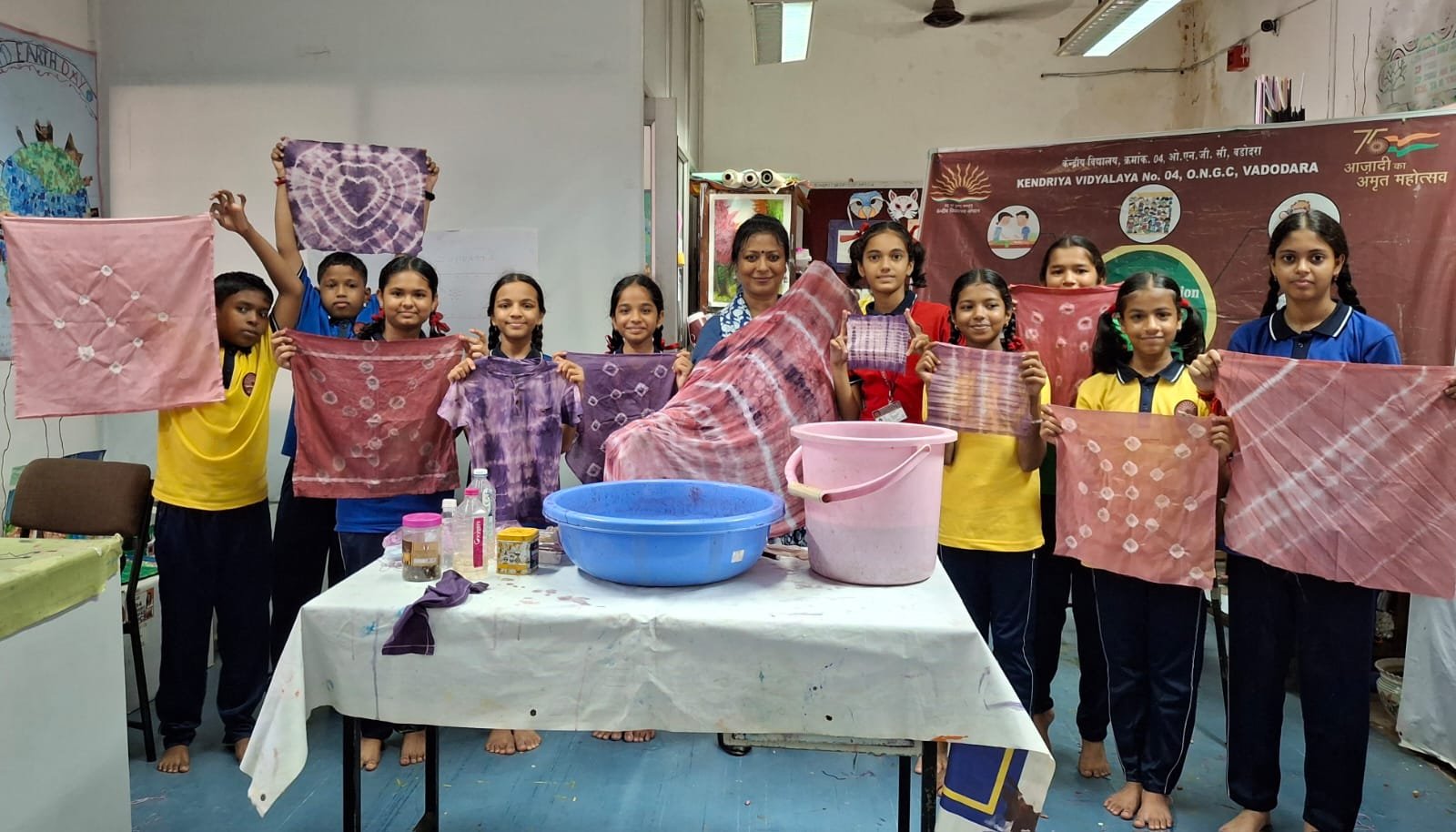
The implementation of the 10 Days Bagless Programme under the National Education Policy 2020 has opened new avenues for experiential and skill-based learning in Kendriya Vidyalaya Sangathan schools. At KV No. 04 ONGC Vadodara, this initiative was transformed into a vibrant celebration of creativity through art education.As an Art educator, I designed engaging activities centered around the traditional art of Tie and Dye (bandhani), enabling students to explore India’s rich textile heritage. The bagless days allowed students to step beyond textbooks and immerse themselves in hands-on learning. With great enthusiasm and curiosity, students actively participated in creating a variety of useful and artistic items such as bedsheets, cushion covers, bags, pillow covers, handkerchiefs, and dupattas.
The school environment during these days was filled with excitement, collaboration, and innovation. Students not only learned artistic techniques but also developed essential life skills like creativity, problem-solving, teamwork, and appreciation for traditional crafts.
This initiative beautifully reflected the vision of NEP 2020 by integrating art with education and promoting holistic development. The Bagless Programme proved to be a meaningful step toward nurturing self-reliant, skilled, and culturally aware learners.
At KV No. 04 ONGC Vadodara, the 10-day Bagless Programme became a dynamic platform where students experienced joyful and meaningful learning. Free from the routine burden of school bags, students engaged in a wide range of creative, vocational, and activity-based tasks that nurtured their curiosity and confidence.
Holistic Learning Experience
The Bagless Days were carefully planned to integrate art, craft, culture, and life skills. Students were encouraged to think creatively, work collaboratively, and express themselves freely. The programme created an inclusive environment where every child could participate, explore, and excel.
Art Integration through Tie and Dye
A major highlight of the programme was the introduction of Tie and Dye (Bandhani) as a hands-on artistic activity. Students learned traditional techniques of folding, tying, and dyeing fabrics, gaining exposure to India’s rich cultural heritage. This not only enhanced their artistic skills but also instilled respect for indigenous crafts.
Skill Development and Creativity
Students enthusiastically created a variety of functional items such as bedsheets, cushion covers, bags, pillow covers, handkerchiefs, and dupattas. Through these activities, they developed fine motor skills, design sense, color coordination, and patience. More importantly, they experienced the joy of creating something meaningful with their own hands.
Vocational Exposure
The programme also served as an introduction to vocational education, helping students understand the value of craftsmanship and self-reliance. It aligned with NEP 2020’s vision of equipping learners with practical skills that can be useful in real-life situations.
Enhanced Student Engagement
Without the pressure of textbooks, students became more active, participative, and confident. The classrooms turned into lively workshops filled with creativity, laughter, and teamwork. Teachers acted as facilitators, guiding students through exploration rather than conventional instruction.
Community and Cultural Connection
The activities also created opportunities to connect with local traditions and community knowledge. Students gained awareness about traditional textile arts and their relevance in today’s world, strengthening their cultural roots.The Bagless Day Programme, introduced under the National Education Policy 2020 and implemented in Kendriya Vidyalaya Sangathan, provided a unique opportunity to integrate traditional art forms into everyday learning. At KV No. 04 ONGC Vadodara, the inclusion of Tie and Dye (Bandhani) activities became one of the most engaging and enriching highlights of the programme.
Detailed Learning of Tie and Dye Techniques
During the Bagless Days, students were introduced to the complete process of tie and dye. They learned:
Different folding and tying techniques
Use of threads, rubber bands, and knots to create patterns
Preparation and safe use of fabric dyes
Color mixing and combinations
Drying and finishing processes
Students explored various traditional patterns such as circles, stripes, waves, and abstract designs, making each creation unique and personal.
Hands-on Creation of Useful Items
The activity went beyond simple experimentation. Students enthusiastically designed and created a wide range of functional and decorative items including:
Bedsheets
Cushion covers
Bags
Pillow covers
Handkerchiefs
Dupattas
This practical approach helped them understand how art can be both creative and useful in daily life.
Creativity and Innovation
Each student experimented with colors and designs, resulting in vibrant and diverse outcomes. The freedom to explore without fear of mistakes encouraged originality and boosted their confidence. Many students even tried innovative pattern combinations, showcasing their imagination.
Teamwork and Collaboration
Tie and dye activities were often conducted in groups, promoting teamwork and cooperation. Students shared ideas, helped each other in tying and dyeing, and collectively celebrated their finished products. This strengthened peer learning and social bonding.
Environmental Awareness
Students were also guided on the importance of using eco-friendly colors and responsible water usage. This added an element of environmental consciousness to the activity, aligning art with sustainable practices.
Learning Beyond the Classroom
The Bagless Day tie and dye sessions transformed classrooms into creative studios. Students experienced joyful learning, connecting art with culture, skill development, and self-expression. The activity also gave them a glimpse into traditional textile practices, inspiring appreciation for India’s rich heritage.
Student Response
The enthusiasm among students was remarkable. Their active participation, excitement, and pride in their creations reflected the success of the programmed. Many students expressed a desire to continue such activities and even apply these skills at home.
Conclusion
The integration of Tie and Dye activities during Bagless Days at KV No. 04 ONGC Vadodara proved to be a powerful medium of experiential learning. It not only enhanced artistic skills but also fostered creativity, collaboration, and cultural awareness—truly fulfilling the vision of the National Education Policy 2020.
The Bagless Day Programme was not just an activity-based initiative but a meaningful educational experience. It successfully bridged the gap between theoretical knowledge and practical application. By fostering creativity, skill development, and cultural appreciation, the programme truly embodied the spirit of the National Education Policy 2020—preparing students to become confident, creative, and responsible individuals.
By Dr. Taruna Mathur, TGT (Art Education), KV No. 04 ONGC Vadodara