
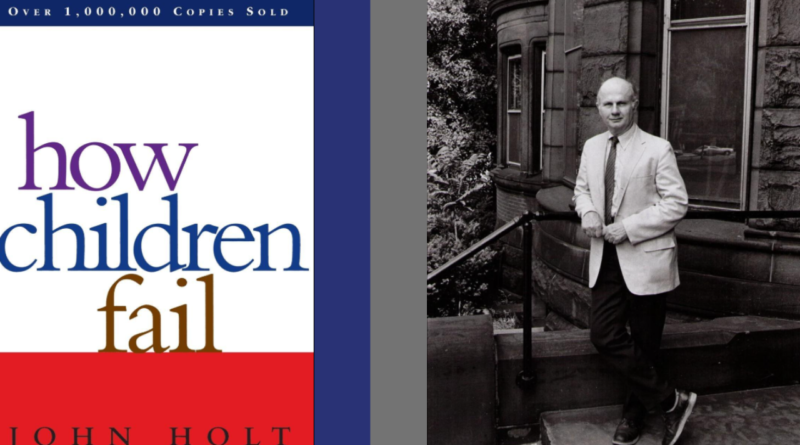
Why John Holt’s How Children Fail Still Challenges Everything We Know About Schooling?
Discover why children love to learn but hate to be taught in this deep dive into John Holt’s classic, How Children Fail. This narrative review explores Holt’s transition from a submarine officer to a radical educator, his observations on how fear stifles intelligence, and why his critique of the "power game" in classrooms remains a vital wake-up call for modern teachers and parents.Imagine a man who spent his youth on a submarine during World War II, graduated from Yale with a degree in industrial engineering, and dedicated years to a global organization seeking world peace through a single world government. This was John Caldwell Holt before he ever set foot into a classroom as a teacher. His education journey wasn’t born from a textbook or a teaching degree; in fact, he never had one. Instead, it began with a sense of frustration with the slow progress of global reform and a suggestion from his sister to try his hand at teaching elementary school.
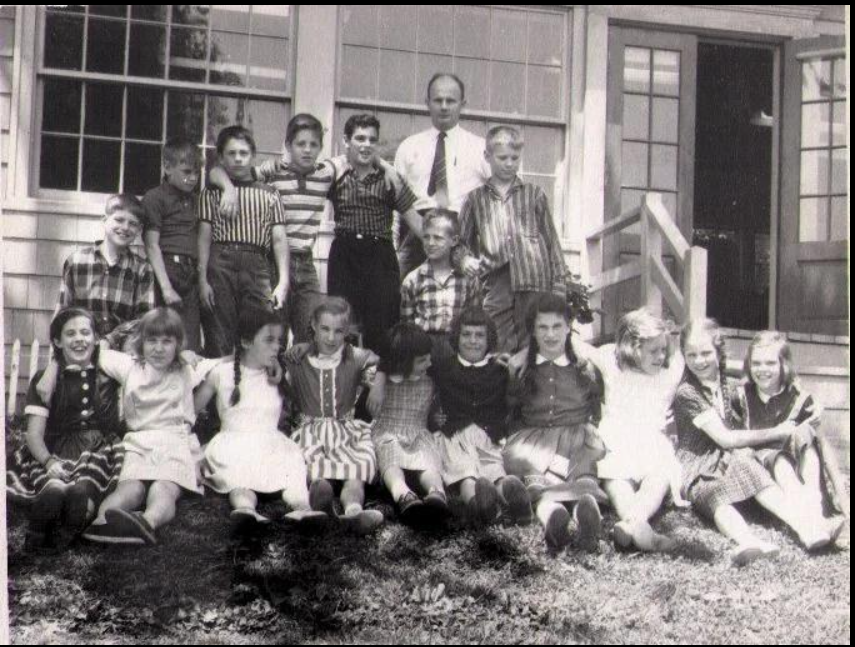
When Holt began his teaching career in 1953 at the Colorado Rocky Mountain School, he brought with him the eyes of an outsider—an objective observer who saw what schools said they were doing versus what they were actually achieving. He noticed something startling: the children in his classrooms, though often from wealthy and intelligent backgrounds, were timid and unsure of themselves. This stood in stark contrast to the infants and toddlers he observed in his personal life, who seemed to approach the world with a fearless, natural curiosity. This observation became the spark for a lifelong vision: to understand why the vibrant curiosity of childhood seemed to wither the moment a child entered the schoolhouse doors.
Introducing a Classic: The Anatomy of Failure
In 1964, Holt distilled these observations into a groundbreaking non-fiction work titled How Children Fail. This isn’t a dry, academic treatise; rather, it is a deeply personal and experiential account of his years in the classroom, republished in a revised edition in 1982. The book is structured around his teaching and research experiences, functioning almost like a series of field notes from the front lines of education.
The setting of the book is the American classroom of the 1950s and 60s, but the themes it explores are universal. Holt doesn’t just theorize; he reflects on specific students, specific lessons, and his own evolving philosophy. It is a semi-autobiographical journey of a teacher who started out trying to improve the system and ended up questioning its very foundation. If you have ever wondered why a bright child suddenly struggles in a classroom, or why “learning” often feels like a chore rather than a joy, this book offers a hauntingly clear explanation that makes it impossible to look at a classroom the same way again.
The Central Ideas: The Power Game of Schooling
At the heart of Holt’s critique is a provocative realization: children love to learn, but they hate to be taught. He argues that every child is born with an inherent intelligence, but that the traditional school system effectively “trains” them to be unintelligent. How? By shifting the focus from discovery to the “right” answer.
Holt observed that schools operate on a “power game.” In this game, children realize that the ultimate goal is not to understand a concept but to gain the teacher’s approval. They become “producers” rather than “thinkers.” Instead of exploring the world, they spend their energy trying to manipulate adults for clues. Holt watched children carefully scan a teacher’s facial expressions or body language, hoping to catch a hint of what the “correct” response might be. In this environment, the natural curiosity of a child is replaced by a desperate need to please and obey.
He identifies fear as the great enemy of learning. In a traditional school, a “no” from a teacher is seen as a defeat or a humiliation, while a “yes” is the only acceptable outcome. This creates a culture where children fear wrong answers so much that they shy away from any challenge where the “right” answer isn’t immediately obvious. Holt argues that a teacher’s true job should be helping children overcome this fear, showing them that failure is “honorable” and a necessary step toward constructing meaning. Instead, he found that many teachers—often unintentionally—build these fears to monumental proportions.
Vivid Windows into the Classroom
Holt’s philosophy comes alive through the real-life incidents he recounts. In one memorable observation, he describes the “guessing games” children play. When a child doesn’t know an answer, they might mumble or “straddle” the response, waiting to see how the teacher reacts before committing. They might even try to get the teacher to answer their own question. These are survival strategies in the “power game,” but they are the opposite of real thinking.
Another vivid example involves the use of Cuisenaire rods in mathematics. Holt observed that while children could often “spit out” an algorithm on paper, they were completely lost when asked to apply those same concepts to the physical rods. Their learning was superficial; they understood the “recipe” for the right answer, but they had no deep understanding of how or why numbers worked. This incident perfectly illustrates his belief that school often values the “producer”—the child who gets the result—over the “thinker” who understands the process.
He also reflects on the ritual of achievement tests. Holt admits that he, like most teachers, would spend the weeks before a test “cramming” information into his students. However, he noted that because this material wasn’t motivated by interest and had no practical use, the children would forget it almost as soon as the test was over. As his colleague Patrick Farenga later paraphrased, a “good student” in this system is simply one who is “careful not to forget what he studied until after the test is taken.”
Words that Resonate: The Voice of John Holt
To truly understand Holt’s impact, one must look at the powerful language he used to challenge the status quo. One of his most famous, and perhaps most jarring, assertions was that schools are “a place where children learn to be stupid.” By this, he meant that the system forces children to abandon their natural intelligence in favor of narrow, right-or-wrong thinking.
He also reflected on the defensive mechanisms children develop: “…after all, if they (meaning us) know that you can’t do anything, then they won’t blame you or punish you for not being able to do what you have been told to do”. This quote highlights the human side of the struggle; children would rather appear “incapable” than risk the humiliation of trying and failing at a task they find meaningless.
Finally, his core observation—that “children love to learn but hate to be taught”—serves as a reminder of the inherent joy of discovery that the “power game” of school often robs from them. When teachers praise students too much, Holt argued, they actually “rob them of the joy of discovering truth for themselves.”
Why the Book Still Matters: A Bridge to the Present
Though written decades ago, How Children Fail feels strikingly relevant today. While not mentioned in the sources provided, modern educational reforms often echo Holt’s call for “experiential learning” and a “child-centered approach”—concepts that were central to his “new ‘new’ ideas” that once got him fired from a teaching position.
The issues he critiqued—rote learning, the crushing pressure of exams, and the lack of room for creativity—are still the primary complaints against modern education systems. For teachers, the book is a reminder to shift the focus from being a source of “right answers” to being a guide for exploration. For parents, it offers a reason to rethink the pressure we place on grades and “production” over genuine curiosity. For policy thinkers, Holt’s work serves as a foundational text for why “unschooling”—a term he championed—remains a compelling alternative for those who believe children learn best when given the freedom to follow their own interests.
Key Insights: How We Actually Learn
Holt’s major takeaway is that learning is a natural, exploratory process. Children are diligent in trying to figure out what is real when they are very young, driven by an innate curiosity about the world. They learn best when they are in a “rich and stimulating learning environment” where they can learn what they are ready for, when they are ready for it.
They “fail” to learn not because they lack intelligence, but because they are coerced. When fear, corporal punishment, or humiliation are introduced into the environment, children move away from exploratory thinking and toward “right/wrong thinking”. The environment must be one where failure is not a defeat, but a tool for constructing meaning.
Reflections for the Home and Classroom
For the teacher reading this, Holt’s journey offers a practical challenge: reduce the emphasis on ranking and testing. Within his own classroom, Holt began taking steps to decrease the notion of ranking children and focused instead on whether they grasped the concepts. He created an environment where students felt “comfortable and confident” enough to admit what they didn’t know.
For parents, the reflection is perhaps even deeper. We must ask ourselves if we are encouraging our children to be “producers” who fetch us the grades we want to see or “thinkers” who are allowed to make mistakes in their pursuit of truth. Are we building up their fears of failure, or are we helping them see failure as “honorable”?
A Question to Ponder
John Holt eventually became so disillusioned with the possibility of school reform that he began to advocate for parents to find “legal ways to remove their children from compulsory schools,” famously referring to an “Underground Railroad” for escaping the system. While not everyone will choose the path of unschooling, his work remains an essential part of every educator’s reading list because it forces us to confront the “power games” we play.
As you close the pages of How Children Fail, you are left with a haunting question: If our children are busy learning how to “please the teacher” and “get the right answer,” what are they failing to learn about themselves and the world? Holt challenges us to stop “teaching” and start allowing children to truly learn. In his vision, the goal of education isn’t a high test score—it is a life worth living, fueled by a curiosity that never has to fear a “wrong” answer.