
Asia University Rankings 2024: Update
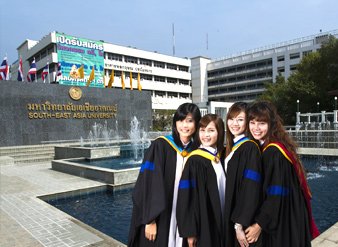
The Times Higher Education Asia University Rankings 2024 utilize identical criteria to the THE World University Rankings, comprising 18 performance indicators. However, these indicators are adjusted to specifically reflect the qualities and characteristics of institutions in Asia.
These rankings evaluate universities based on their fundamental missions, encompassing teaching, research, knowledge transfer, and international outlook. This approach aims to offer comprehensive and equitable comparisons among institutions. Notably, the methodology for the 2024 rankings introduces significant revisions compared to previous editions.
Tsinghua University and Peking University in China maintain their positions as the top two universities for the fifth consecutive year. Notably, mainland China is well-represented in the top 10, with five universities making the list, including Zhejiang University’s notable rise from 12th to ninth place.
Hong Kong and Singapore each boast two universities in the top 10, though Hong Kong’s leading institutions experience a decline in rankings while Singapore’s remain stable or improve.
Japan’s leading institution, the University of Tokyo, achieves its highest ranking since 2015, climbing to fifth place. Conversely, Seoul National University, South Korea’s top-ranked institution, moves further from the top 10, dropping three places to 14th.
Mainland China dominates the top 100 with 33 universities, followed by South Korea with 16. However, India’s representation in the top 100 is minimal, with only the Indian Institute of Science Bangalore making the list. This disparity raises concerns, particularly given India’s large population and its emphasis on its youthful demographic dividend.
“Analysts have long perceived China as imitating rather than innovating,” explains Caroline Wagner, a science and technology policy expert at Ohio State University. “While this may have been true in the past, China is now engaging in pioneering and cutting-edge research.”
Regarding the potential implications of China’s burgeoning research capabilities on the broader Asian region, Huang suggests that China will emerge as a regional focal point, wielding increased influence over neighboring nations. This influence could manifest in various ways, such as attracting more students and scholars from nearby countries and fostering greater academic exchanges and collaboration with Asian nations in both teaching and scientific research endeavors.
Only one Indian university, the Indian Institute of Science Bangalore, made it to the top 100 universities in the rankings. This limited representation from India, considering the country’s size, raises concerns. India, with its substantial population and claims of having the largest youth demographic globally, may find it worrying that its presence among the top universities in South Asia is so minimal. This situation contrasts sharply with India’s aspirations to project its democratic demographic dividend to the world.
The 2024 rankings encompass 739 universities from 31 territories, with Japan leading in representation with 119 institutions, followed by India with 91. Notably, there has been an increase in the number of universities joining the rankings since the previous year, driven largely by India, Turkey, Iran, and Pakistan.