
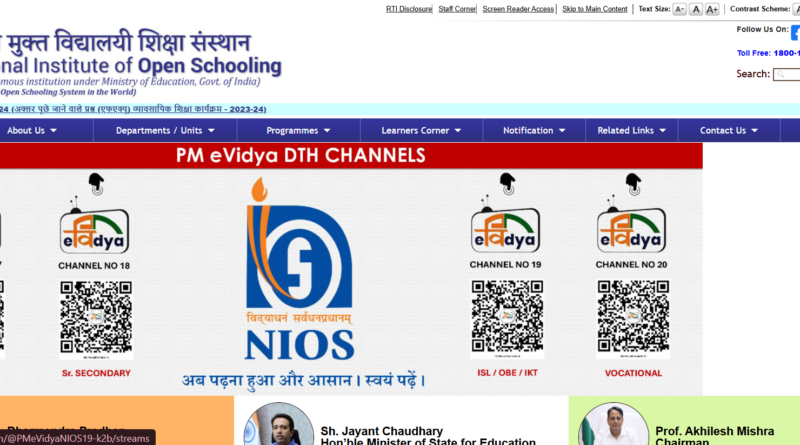
Education Ministry and NIOS Hold High-Level Talks to Reintegrate 2 Crore School Dropouts
Ministry of Education and National Institute of Open Schooling held a high-level meeting to discuss strategies for bringing nearly 2 crore dropout students back into the education system.
Ministry of Education and National Institute of Open Schooling recently held a high-level meeting aimed at developing strategies to reintegrate nearly 2 crore dropout students into India’s education system.
The discussions reportedly focused on expanding flexible learning opportunities, strengthening open schooling systems, improving digital access, and creating targeted interventions for students who discontinued formal education due to social, economic, geographical, or personal challenges.
The initiative reflects growing national concern regarding school dropout rates and the long-term educational and economic impact of interrupted schooling.
Focus on Re-enrolment and Educational Inclusion
Officials and education experts participating in the meeting emphasised the importance of ensuring that children and young learners who left school are provided pathways to resume education without stigma or institutional barriers.
The discussions reportedly explored measures such as:
- Flexible learning models
- Community-based educational outreach
- Digital and blended learning systems
- Vocational integration
- Bridge courses and foundational learning support
- Strengthening open and distance education
Experts believe such approaches are essential for reaching students from vulnerable and underserved backgrounds.
Role of NIOS in Flexible Education
National Institute of Open Schooling plays a major role in India’s alternative and flexible education ecosystem.
The institution provides opportunities for:
- School dropouts
- Working learners
- Rural students
- Adult learners
- Learners with social or economic constraints
- Students requiring flexible academic schedules
NIOS offers secondary, senior secondary, vocational, and life-enrichment programmes through open and distance learning systems.
Education experts increasingly view open schooling as a critical mechanism for improving educational access and lifelong learning opportunities.
Scale of the Dropout Challenge
India continues to face significant challenges related to student retention, especially among economically weaker and socially vulnerable populations.
Students often discontinue education because of factors such as:
- Financial hardship
- Child labour
- Migration
- Family responsibilities
- Lack of school access
- Early marriage
- Health-related issues
- Learning gaps and academic stress
The COVID-19 pandemic also intensified dropout risks in several regions due to digital inequality and prolonged school disruptions.
Education specialists warn that large-scale dropouts can have long-term implications for employment, literacy, social mobility, and economic development.
National Education Policy and Inclusion Goals
The reintegration effort aligns closely with the goals of the National Education Policy (NEP) 2020, which emphasises universal access to education and reduction of dropout rates at all levels.
NEP 2020 advocates:
- Flexible educational pathways
- Multiple entry and exit systems
- Foundational literacy and numeracy
- Vocational integration
- Technology-enabled learning
- Inclusive and equitable education
The policy also encourages strengthening alternative education systems to ensure that no learner is permanently excluded from educational opportunities.
Technology and Digital Learning Strategies
One of the major discussion areas reportedly included the use of digital learning technologies to reconnect dropout students with educational systems.
Potential strategies include:
- Online learning platforms
- Mobile-based educational access
- Hybrid classroom models
- Community digital centres
- Recorded lectures and self-learning modules
However, experts caution that technology alone cannot solve the dropout challenge unless accompanied by improvements in digital access, internet connectivity, and local educational support systems.
Vocational and Skill-Based Education
Officials also reportedly discussed integrating vocational education with formal academic pathways.
Experts believe many dropout students may benefit from programmes that combine:
- Academic learning
- Skill training
- Entrepreneurship education
- Livelihood-oriented courses
Such models can help learners continue education while also improving employability and economic independence.
Under NEP 2020, vocational exposure is increasingly being integrated into mainstream education to make learning more flexible and relevant.
Importance of Community Participation
Education experts emphasise that reducing dropout rates requires cooperation among:
- Schools
- Families
- Local communities
- State governments
- NGOs
- Social organisations
- Digital education providers
Community-based interventions often play a major role in identifying vulnerable learners and encouraging re-enrolment.
Special attention is also needed for girls, rural learners, migrant children, and socio-economically disadvantaged groups.
Open Schooling as a Second Opportunity
Many educators describe open schooling not as a “backup option,” but as a parallel and equally valuable pathway within the education system.
Flexible education models can help learners:
- Resume interrupted education
- Complete school qualifications
- Prepare for higher education
- Access vocational opportunities
- Build confidence and employability
Experts note that second-chance education systems are increasingly important in rapidly changing economies where lifelong learning has become essential.
Need for Long-Term Structural Reforms
While re-enrolment initiatives are important, education specialists argue that long-term solutions must also address the root causes of school dropouts.
This includes improving:
- School infrastructure
- Teacher support systems
- Learning quality
- Financial assistance
- Nutritional support
- Student counselling and mental health services
- Foundational learning outcomes
Reducing academic pressure and making education more relevant and engaging are also seen as critical factors in improving retention.
Toward Universal Educational Access
The high-level discussions between Ministry of Education and National Institute of Open Schooling reflect a broader national effort to make education more inclusive, flexible, and accessible.
As India aims to strengthen human capital development and achieve broader educational goals, bringing dropout students back into learning systems is expected to remain a major policy priority.
For millions of learners, such initiatives could provide not just a return to classrooms, but a renewed opportunity for education, skills, and future growth.