
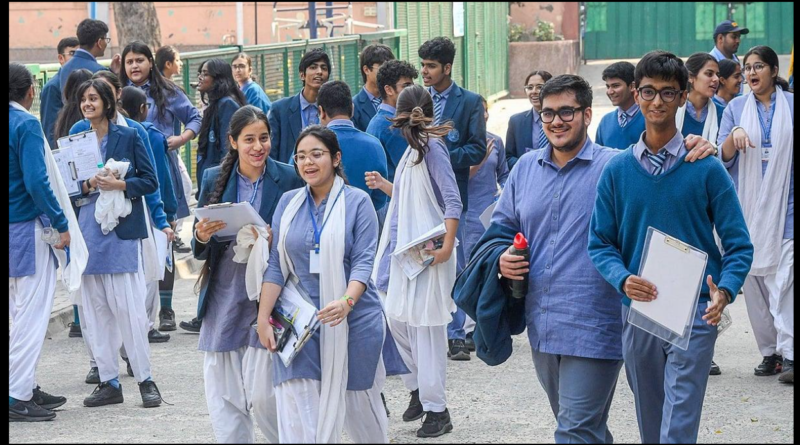
CBSE Class 10 Exams 2026: A New Era of Two Chances
CBSE Class 10 board exams 2026 have concluded for the first phase. Under the new policy, students will get a second opportunity to improve their scores in the optional May examination.
The annual board examination season in India carries a familiar rhythm. Homes turn quieter, television volumes go down, and parents become silent partners in the intense academic journey of their children. For decades, the Class 10 board examination conducted by the Central Board of Secondary Education (CBSE) has been a defining milestone in a student’s school life.
In 2026, however, this long-standing tradition has taken a new turn.
The first phase of the CBSE Class 10 board examinations has now concluded across the country. Yet, unlike previous years, this is not the final chapter of the examination season. Under a new evaluation policy inspired by the broader educational reforms envisioned in the National Education Policy 2020, students will get another opportunity to appear for the exam in May 2026 to improve their performance.
The reform marks a significant shift in how school assessment is being imagined in India.
The First Phase Concludes
The CBSE Class 10 board examinations for the academic year 2025–26 began on February 17 and concluded on March 11, 2026. More than 25 lakh students from CBSE-affiliated schools in India and abroad appeared for the exams.
Subjects such as English, Science, Social Science, and Mathematics formed the core of the schedule, with examinations conducted in the familiar morning slot from 10:30 a.m. to 1:30 p.m.
For most students, the completion of the final paper brought relief after months of preparation. But this year, the sense of closure is slightly different. The board examination system itself is undergoing a transformation.
Why Two Board Exams?
For generations of Indian students, board examinations were high-stakes events. A single set of papers determined the final score for the entire year. If a student performed poorly due to illness, anxiety, or a difficult question paper, the consequences could be significant.
The new CBSE policy seeks to address this issue.
Beginning in 2026, Class 10 board exams are being conducted twice a year:
- The February–March exam is the main examination that all students must take.
- The May exam is optional and intended for students who want to improve their marks.
The board will ultimately record the best score obtained in either attempt.
This approach aligns with the NEP 2020 vision of reducing exam pressure and making assessment more flexible and learner-friendly.
“A single examination should not determine a student’s academic future. Multiple opportunities encourage learning rather than fear.”
The May Improvement Examination
The second phase of the board examinations is expected to take place between mid-May and early June 2026.
Unlike supplementary examinations of the past, this second attempt is not only for those who fail. Instead, it is designed as an improvement opportunity.
Students may choose to reappear in selected subjects if they believe they can perform better. For instance, a student who scored lower than expected in mathematics or science during the first attempt can try again within the same academic year.
The final marksheet will reflect the higher of the two scores.
This provision has been widely welcomed by students and parents alike.
When Will Results Be Declared?
The results of the first phase are expected to be announced around mid-May 2026, just before the optional improvement examination begins.
Students will be able to access their marks through official CBSE portals and digital certificate platforms.
Once the May examination cycle is completed, the board will release a final consolidated marksheet, incorporating improved scores wherever applicable.
A Cultural Shift in Indian Schooling
The introduction of a two-exam system may appear procedural at first glance, but its implications go far deeper.
For decades, India’s education system has been criticized for placing excessive emphasis on one-time examinations. Students often experience enormous psychological pressure, knowing that a single day’s performance might shape their academic future.
By allowing a second attempt within months, CBSE is attempting to soften this rigid structure.
Education experts believe this reform could gradually change the culture of learning in schools. Instead of treating examinations as a final verdict, students may begin to see them as part of an ongoing learning process.
“The new policy turns board exams from a one-shot judgment into a process of reflection and improvement.”
Challenges for Schools and Teachers
While the reform has been welcomed in principle, its implementation has also raised practical concerns.
Schools must now manage an extended examination calendar stretching from February to June. Teachers may need to supervise multiple exam cycles, coordinate evaluation processes, and support students preparing for improvement exams.
Some administrators worry that the longer exam window could disrupt teaching schedules for the next academic session.
Others argue that the reform may initially create logistical challenges but will ultimately lead to a healthier academic environment.
How Students Are Responding
Among students, the new system has generated cautious optimism.
Many see the May examination as a valuable safety net. Knowing that there is another opportunity can reduce anxiety during the first attempt.
At the same time, some students worry that the extended exam cycle might prolong stress rather than reduce it.
Nevertheless, the possibility of improving marks without waiting a full year is widely viewed as a positive development.
The Beginning of a New Assessment Model
The CBSE’s decision to conduct board examinations twice a year could become a turning point in India’s educational history.
If the model proves successful, it may encourage further reforms such as:
- competency-based assessments
- modular subject examinations
- greater emphasis on conceptual learning
In that sense, the CBSE Class 10 examinations of 2026 may be remembered as the beginning of a transition—from a rigid examination culture to a more flexible and student-friendly system.
A Season of Reflection and Opportunity
For the millions of students who have just completed their Class 10 board examinations, the immediate task is simple: wait for the results and take a well-earned break.
But for those who believe they can do better, the journey is not yet over.
The May improvement examination offers a second chance not just to score higher marks but to approach learning with renewed confidence.
And perhaps that is the most important message of the reform: education should allow room for growth, correction, and second chances.