
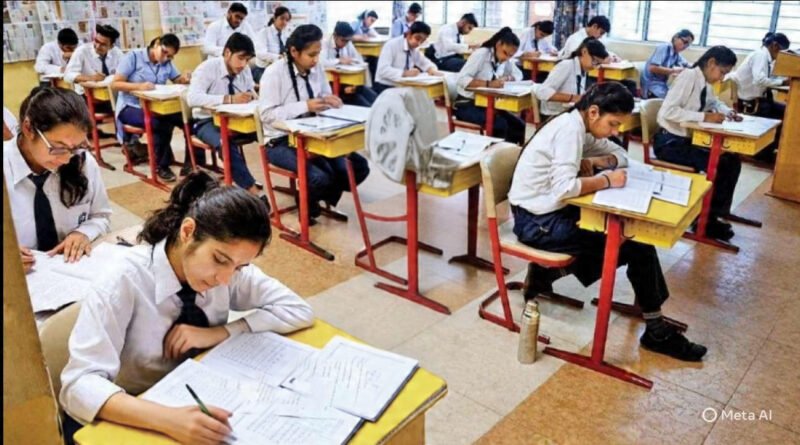
CBSE Class 10 Second Board Exam 2026: LOC Submission Dates, Fee Timeline and May Improvement Exam Explained
The Central Board of Secondary Education has released detailed guidelines for the Class 10 Second Board Examination 2026, scheduled to be conducted in May 2026. The second examination provides students with an opportunity to improve their marks within the same academic year, reducing the pressure associated with a single high-stakes board examination.
As part of this system, CBSE has also announced the timeline for submission of the List of Candidates (LOC) and payment of examination fees for students who wish to appear in the improvement examination.
Education experts see this step as a significant reform aimed at making school assessments more flexible and student-friendly.
CBSE Class 10 Second Board Exam 2026: Activity & Schedule
Based on the official circular reported by education sources, the following schedule has been announced for the registration process.
| Activity | Schedule / Date |
|---|---|
| LOC Submission – First Phase | March 18 – March 31, 2026 |
| Fee Payment – First Phase | Within 5 days after the declaration of the main board results |
| LOC Submission – Second Phase | Within 5 days after the declaration of the main board results |
| Fee Payment – Second Phase | Within 5 days after the declaration of the main board results |
| LOC Submission – Third Phase (with Late Fee) | From the 7th day after the result declaration for 2 days |
| Fee Payment – Third Phase (with Late Fee) | From the 7th day after the result declaration for 2 days |
| CBSE Class 10 Second Board Examination | May 15 – June 1, 2026 (expected window) |
Source: CBSE circular reported by The Indian Express.
What is the CBSE Second Board Examination?
The second board examination is essentially an improvement opportunity for students who wish to enhance their marks after the first board exam results are declared.
Traditionally, students had to wait an entire year to improve their scores. The new system allows them to attempt the exam within weeks of the first result, saving valuable academic time.
This reform aligns with the broader vision of the National Education Policy (NEP) 2020, which encourages multiple opportunities for assessment rather than relying on a single exam.
Flexibility for Students
One important feature of the new policy is the flexibility provided to students.
CBSE has allowed students to wait for the main board results before making the final decision about appearing for the improvement exam.
This means:
- Students confident about their preparation can register early.
- Others can wait for the result and decide later.
- Those satisfied with their marks do not need to appear again.
This approach ensures that the second exam remains optional and student-centric.
Who Should Consider Appearing for the Second Exam?
The May improvement exam can be useful for students who:
- Want to increase their overall percentage.
- Need higher marks to enter a preferred stream in Class 11.
- Feel their performance in the first exam did not reflect their preparation.
However, teachers advise students to make a careful decision, as preparing again within a short time requires discipline and focused revision.
What Schools Need to Do
Schools play an important role in the registration process.
They must:
- Submit the List of Candidates (LOC) within the deadlines.
- Ensure timely payment of examination fees.
- Inform students and parents about the registration window.
Failure to complete the process within the stipulated time may result in late fees or rejection of applications.
What Students Should Do After the Results
Once the CBSE Class 10 results are announced, students should take the following steps:
- Carefully review their marks in each subject.
- Discuss the results with teachers and parents.
- Decide whether improving marks will significantly help their academic plans.
- If necessary, register for the May improvement exam within the deadline.
Students planning to appear again should immediately begin targeted revision, focusing on subjects where improvement is possible.
A Step Towards Exam Reform
Education analysts believe that CBSE’s new two-exam system is an important step toward reducing exam anxiety.
Instead of putting all the pressure on a single exam, the system gives students a second opportunity to demonstrate their understanding and academic ability.
If implemented effectively, this reform could gradually transform how board examinations are perceived in India, making them more supportive of learning rather than purely high-stakes assessments.