
When a Classroom Became a Stage: Rethinking Teaching-Learning
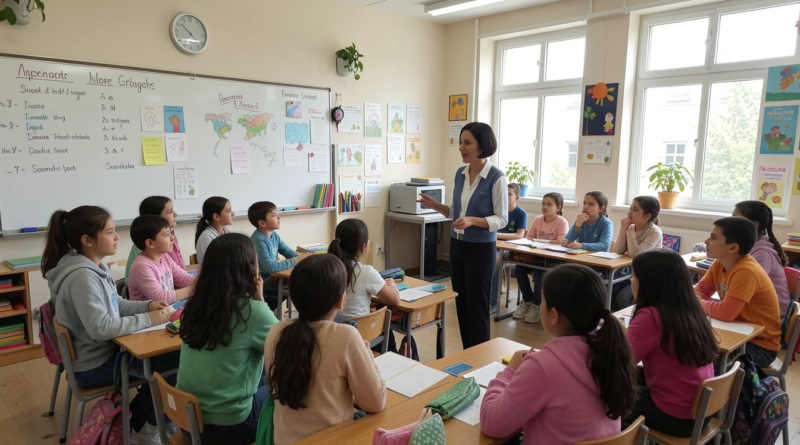
A powerful classroom observation from Kendriya Vidyalaya reveals how a simple mime activity helped students understand marginalisation, highlighting the impact of innovative, experiential teaching beyond traditional methods.I readily confess that I have learnt a lot about teaching learning than myself evolving as a teacher in classrooms. In this context, I would like to share an experience from my class observation in one of the Kendriya Vidyalayas in the Guwahati Region. I entered a Social Science class with an observation sheet in hand. At first, I felt a little disappointed because the teacher had not written the topic on the board, and I quickly noted this lapse. She then announced to the class that they would witness a role play. She instructed the students to watch carefully and be prepared for a discussion afterward. Gradually, I found myself becoming interested in the proceedings.
A few chairs were placed in front of the class, with a table set slightly to the side. Some students sat on the chairs, while one stood at the table. The students on the chairs engaged in animated conversation, lip-syncing without speaking aloud. The boy at the table mimicked actions one would see at a tea shop—mixing tea and pouring it from a vessel into a cup with a flourish. I realized the setting represented a tea shop, and what unfolded was not a role play but a mime show. The tea was served, and the boys on the chairs pretended to sip it.
Soon, another boy entered, bent in a subservient posture, and gestured for a cup of tea by mimicking the act of sipping. The man at the counter pretended not to notice him at first, but eventually, in a patronizing manner, walked over and poured tea into the cup the boy held reverently with both hands. The boys on the chairs looked at the newcomer as though he was unwelcome and continued their gossip. The so-called intruder finished his tea, mimed washing the cup, and placed it back in its designated spot.
The teacher then asked the students to share their observations. Many hands shot up, and the students offered sharp and thoughtful insights. I was excited to hear their keen observations. After the discussion, the teacher revealed that the scene they had witnessed illustrated the concept of marginalisation—a topic from Civics in Class 7 or 8.
Instead of writing the topic on the board and giving a long, pedantic definition, the teacher had achieved the learning outcome in an innovative and engaging way.
I still vividly remember that class!
Shri Nagaraju Kikkeri, an accomplished academician, has served as Assistant Commissioner in Kendriya Vidyalaya Sangathan (KVS), India.