
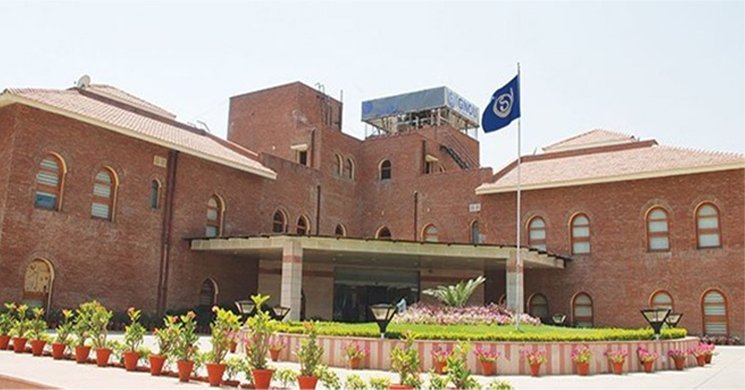
When Universities Defy Regulators, Students Pay the Price
A critical look at the IGNOU–UGC conflict highlights how regulatory gaps and institutional decisions are leaving thousands of students uncertain about their degrees, raising serious questions about accountability, policy implementation, and student protection in India’s higher education system.In India’s expanding higher education ecosystem, policy conflicts are not new. But when these conflicts begin to directly endanger the academic futures of thousands of students, they demand urgent public attention. The recent standoff between the University Grants Commission (UGC) and Indira Gandhi National Open University (IGNOU) is one such case—quiet in its emergence, but potentially devastating in its consequences.
At the heart of the issue lies a fundamental regulatory directive. Following the implementation of the National Commission for Allied and Healthcare Professions (NCAHP) Act, 2021, the UGC advised institutions to discontinue certain programmes—particularly in fields like psychology—that require clinical and practical training, if they are being offered in distance mode. The rationale is sound: professional competence in such domains cannot be ensured without hands-on experience.
However, reports indicate that IGNOU has continued admissions to some of these programmes, notably MA Psychology, even after such advisories. Thousands of students, trusting the credibility of a central university, enrolled, paid fees, and began coursework. Only later did uncertainty begin to surface regarding the recognition and validity of their degrees.
This situation raises uncomfortable questions. Can an institution continue to offer programmes that exist in a grey regulatory zone? Is a disclaimer in a prospectus sufficient to transfer the burden of risk onto students? More importantly, in a system where regulatory bodies and universities operate with overlapping authority, who ultimately safeguards the interests of learners?
IGNOU, to its credit, has argued that many students pursue such courses for academic enrichment rather than professional practice. It has also pointed to internal approvals and disclaimers issued to students. Yet, these arguments fail to address the core issue: students do not merely seek knowledge; they seek credentials that carry legitimacy in the academic and professional world.
The UGC’s position, on the other hand, emphasizes quality assurance and professional standards. It is difficult to fault a regulator for insisting that disciplines involving clinical judgment must adhere to rigorous training norms. However, the problem lies not in the regulation itself, but in its implementation. If such restrictions were to be enforced, why were clear, enforceable, and timely mechanisms not put in place to prevent admissions in the first place?
What emerges, therefore, is not just an institutional lapse, but a systemic failure. Regulatory fragmentation, delayed communication, and the absence of a robust student protection framework have collectively created a situation where learners are left to navigate uncertainty on their own.
The consequences are not merely administrative—they are deeply human. Students who have invested time, money, and aspiration now face the possibility that their degrees may not hold value. For many, especially working professionals and those from modest backgrounds, this is not just an academic setback but a personal and financial crisis.
If India aspires to build a credible and globally competitive higher education system, such episodes must serve as a wake-up call. There is an urgent need for greater coordination between regulatory bodies and institutions, clearer communication of policy changes, and, above all, mechanisms that place student welfare at the centre of decision-making.
At the very least, students already enrolled must be protected through transitional provisions, alternative pathways, or formal recognition frameworks. Leaving them in limbo is neither just nor acceptable.
Education is built on trust—the trust that institutions will act responsibly and that regulators will ensure fairness. When that trust is compromised, the damage extends far beyond a single programme or university. It undermines confidence in the entire system.
The IGNOU-UGC episode is, therefore, not just a policy dispute. It is a test of accountability. And as it stands today, it is the students who are bearing the cost of a system that has yet to align its intentions with its actions.
I