
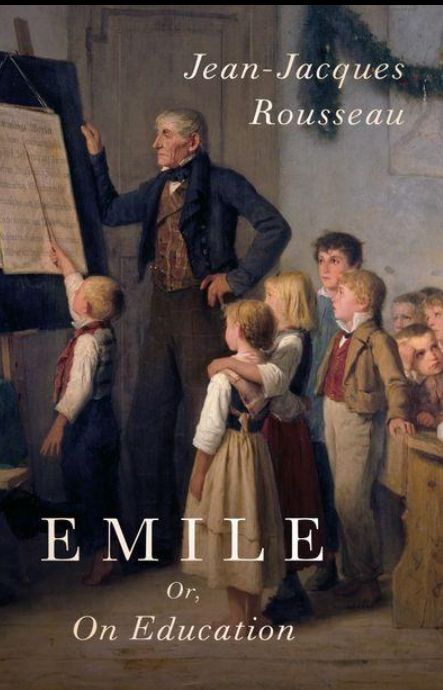
Emile by Rousseau: Why Natural Learning Still Matters in Modern Education
A thoughtful review of Rousseau’s Emile, or On Education, exploring child-centered learning, natural development, and why his ideas still challenge modern schooling.What if education followed nature, not pressure? Discover Rousseau’s timeless ideas in Emile and their relevance for today’s teachers and parents.
Letting the Child Unfold Naturally
There is a familiar scene in many homes and classrooms: a young child, barely able to sit still, is asked to memorize alphabets, numbers, or definitions. The child hesitates, looks away, fidgets—while the adult insists, corrects, and sometimes scolds. In that moment, a quiet question arises: Are we educating the child, or are we trying to control the child?
This question lies at the heart of one of the most influential works in educational philosophy—Emile, or On Education by Jean-Jacques Rousseau. Written in the 18th century, the book continues to challenge how we think about children, learning, and the purpose of education.
A Revolutionary Voice in a Rigid Age
Rousseau lived in a time when education was strict, formal, and often harsh. Children were expected to behave like miniature adults—quiet, obedient, and receptive to instruction. Learning was imposed, not discovered.
Against this backdrop, Rousseau’s ideas were nothing short of revolutionary. He dared to suggest that children are not incomplete adults, but beings with their own nature, rhythm, and way of understanding the world. Education, therefore, should not shape them forcefully but allow them to grow naturally.
Understanding Emile: More Than a Book
Emile is not a conventional educational manual. It is a philosophical narrative that follows the life of a fictional child, Emile, from infancy to adulthood. Through this journey, Rousseau explores how education can align with the natural development of a human being.
Rather than prescribing rigid methods, Rousseau presents a vision—a thought experiment—of what education could look like if it truly respected the child.
At its core, the book asks:
What happens when we trust nature more than we trust systems?
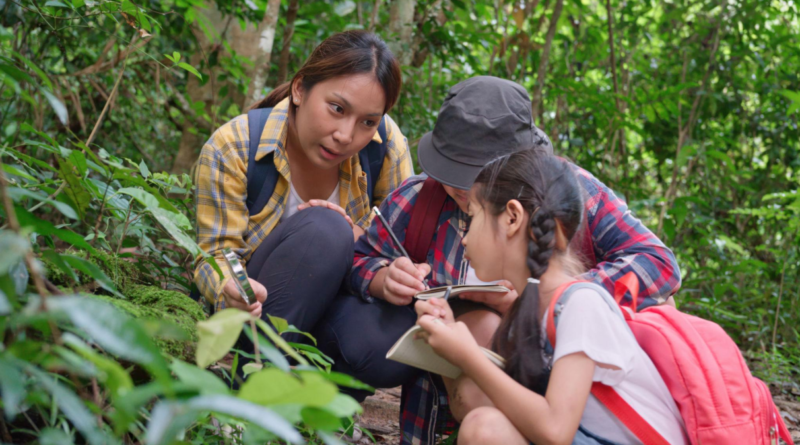
Let the Child Grow Naturally
One of Rousseau’s most powerful ideas is simple yet profound:
Education must follow the natural development of the child.
Children are not ready to learn everything at once. Just as a plant cannot be forced to grow faster by pulling its leaves, a child cannot be made to learn before they are ready.
Rousseau believed that each stage of childhood has its own purpose:
- Early years are for physical growth and sensory exploration
- Later years are for reasoning and intellectual development
When we rush this process, we do not accelerate learning—we disrupt it.
This idea feels especially relevant today, when children are introduced to formal academics at increasingly younger ages. In our attempt to give them a “head start,” we may unknowingly take away the very foundation of learning—curiosity and joy.
Nature is the Best Teacher
Rousseau places immense faith in nature—not just the natural world, but the natural instincts and experiences of the child.
He argues that children learn best not through lectures, but through interaction with their environment. A child learns balance by walking, not by being told how to walk. A child understands cause and effect by experimenting, not by memorizing definitions.
In this sense, nature becomes the greatest teacher.
This does not mean the absence of adults. Rather, it redefines their role. The teacher or parent becomes a careful observer and facilitator, creating conditions where learning can happen naturally.
Instead of saying, “This is how it is,” the adult allows the child to discover, “This is what I understand.”
Do Not Teach Too Early
Perhaps the most striking—and controversial—idea in Emile is Rousseau’s warning:
Do not teach too early.
In modern education systems, early achievement is often celebrated. Children who read, write, or calculate at a young age are considered “advanced.” But Rousseau challenges this assumption.
He suggests that premature instruction may produce quick results, but it often leads to shallow understanding and loss of interest. True learning requires readiness—both mental and emotional.
A child who is forced to learn before being ready may comply, but will not truly engage. Over time, this can lead to boredom, anxiety, or even aversion to learning itself.
Rousseau’s insight invites us to pause and reflect:
Are we prioritizing speed over depth?
Are we valuing performance over understanding?
Learning Through Experience
Another key idea in Emile is that children learn best through experience, not instruction.
Instead of giving answers, Rousseau encourages situations where the child can discover answers independently. For example, rather than explaining the concept of heat, allow the child to feel warmth and understand its effects.
Mistakes, in this approach, are not failures—they are essential steps in learning.
This stands in sharp contrast to many classrooms today, where mistakes are corrected immediately, often leaving little room for exploration. Rousseau reminds us that learning is not about avoiding errors, but about making sense of them.
A Critique of Modern Education
Although written centuries ago, Emile speaks directly to the challenges of modern education.
Today’s systems often emphasize:
- Early academic achievement
- Standardized testing
- Structured curricula
- Limited freedom
In such environments, childhood can become compressed—filled with schedules, expectations, and performance pressures.
Rousseau’s ideas challenge this approach. He asks us to reconsider:
- Are we allowing children to experience childhood fully?
- Are we creating learners, or merely performers?
- Are we nurturing curiosity, or suppressing it?
These questions are not easy, but they are necessary.
Why Emile Still Matters Today
In recent years, there has been a growing shift toward child-centered education, experiential learning, and holistic development. Educational reforms across the world, including India’s National Education Policy (2020), echo many of Rousseau’s ideas.
Yet, there remains a gap between philosophy and practice.
Emile serves as a reminder that meaningful education is not about adding more content or technology—it is about rethinking our relationship with the child.
For teachers, it encourages flexibility and sensitivity.
For parents, it promotes patience and trust.
For policymakers, it offers a deeper vision of what education can be.
Reflections for Teachers and Parents
Rousseau’s ideas may seem idealistic at first, but they offer practical insights when applied thoughtfully.
For teachers:
- Allow space for discussion, exploration, and questioning
- Focus on understanding rather than completion
- Observe children closely—they often reveal how they learn best
For parents:
- Resist the urge to rush learning
- Value play and free time as essential, not optional
- Trust your child’s natural curiosity
These are not radical changes, but small shifts in perspective that can have a lasting impact.
The Courage to Trust the Child
As we reflect on Emile, one idea stands above all:
Education is not about shaping the child—it is about allowing the child to unfold.
This requires patience, humility, and above all, trust.
Trust that the child is capable.
Trust that learning will happen.
Trust that nature, when respected, guides growth in its own time.
In a world eager for quick results and measurable success, this trust can feel difficult. Yet, it may be the most important step toward meaningful education.
As you step away from this book, a quiet question remains:
If nature is the best teacher, then what is the true role of education—and are we ready to embrace it?