
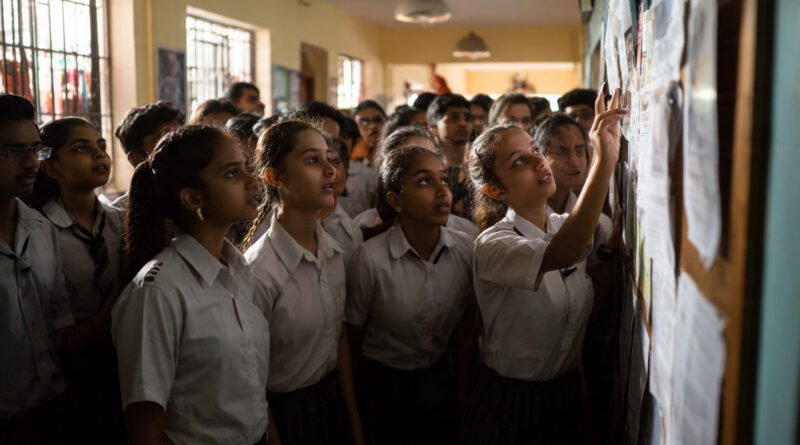
CBSE Class 12 Results 2026: Girls Continue to Outperform Boys as Gender Gap Reaches Decade Low
The gender gap in Central Board of Secondary Education Class 12 results has narrowed significantly over the last decade, yet girls continue to lead boys in pass percentage. Here’s a detailed analysis of trends, performance data, and what it means for Indian education.Narrowing Gender Gap
The upcoming Central Board of Secondary Education Class 12 results for 2026 are once again drawing attention to an important academic trend in India’s school education system — girls continuing to outperform boys in board examinations. While female students have consistently recorded higher pass percentages over the past decade, the latest data shows that the gap between boys and girls is gradually narrowing.
According to recent reports, the gender gap in CBSE Class 12 performance has reduced by nearly 39 percent since 2015. Yet, despite the steady improvement among boys, girls continue to remain ahead in overall pass percentages.
The trend reflects not only changing academic patterns but also broader social and educational developments across India.
A Decade of Consistent Female Dominance
Over the last ten years, girls have remained ahead of boys in CBSE Class 12 examinations every single year. In 2015, girls recorded a pass percentage of 87.56 percent, while boys stood at 77.77 percent, creating a gap of 9.79 percentage points. By 2025, that difference had narrowed to around 5.94 percentage points.
The improvement among boys has been substantial. Reports indicate that boys improved their overall pass percentage by more than 10 percentage points during this period, nearly twice the pace of improvement among girls. However, girls also continued progressing steadily, ensuring that they retained their lead year after year.
Education experts believe this narrowing gap indicates positive changes in student engagement, access to academic resources, and improved awareness regarding competitive academic performance among male students.
Pandemic Years Changed the Pattern
One of the most notable shifts occurred during the pandemic years. Between 2019 and 2020, the gender gap shrank dramatically from over 9 percentage points to below 6 percentage points. This period coincided with changes in evaluation methods, internal assessments, and alternative marking systems adopted during the COVID-19 disruption.
In 2021, when board examinations were significantly altered due to the pandemic, pass percentages for both boys and girls crossed 99 percent. The gap almost disappeared temporarily. However, after the restoration of regular examinations in 2022 and 2023, the traditional pattern returned, with girls once again securing a comfortable lead.
This suggests that while external evaluation conditions may influence overall pass rates, the consistent female advantage in academic performance remains deeply rooted.
Why Are Girls Performing Better?
Several education studies and academic analyses point toward multiple reasons behind girls consistently outperforming boys in school board examinations.
One major factor is discipline and study consistency. Many educators believe girls tend to maintain more structured study schedules and show greater consistency in completing assignments, project work, and internal assessments. Reports also suggest that girls often perform better in language subjects and coursework-based evaluations.
Another contributing factor is lower compartment rates among female students. Boys continue to account for a larger proportion of compartment and supplementary examination cases, indicating gaps in subject-wise performance.
Subject selection patterns may also play a role. A larger percentage of girls opt for commerce and humanities streams, which generally record higher pass percentages than science streams. However, even in science education, girls have increasingly demonstrated strong academic performance in recent years.
Broader Changes in Indian Education
The narrowing gender gap also reflects broader social transformation in India. Over the last decade, there has been significant improvement in girls’ access to education, awareness about higher studies, and parental support for female academic achievement.
Government schemes promoting girls’ education, rising urbanisation, increased digital access, and changing social attitudes have contributed to stronger female participation in secondary and higher secondary education.
At the same time, educators are increasingly discussing the need to address academic motivation and learning engagement among boys. Experts argue that while girls have benefited from structured school systems, many boys continue to face distractions linked to social media, gaming, and inconsistent study habits.
The conversation is gradually shifting from comparing genders to understanding learning behaviour and academic support systems.
Result Expectations for 2026
The CBSE Class 12 results for 2026 are expected to be declared in the second or third week of May. Based on previous trends, experts anticipate girls may once again record pass percentages above 91 percent, while boys are expected to remain in the 85–87 percent range.
Students will be able to access their results through official CBSE portals and digital platforms such as DigiLocker and UMANG.
Official Websites for Results
Students are advised to keep their roll number, school number, and admit card ID ready while checking results online.
Beyond the Numbers
While the statistics clearly show girls leading in board examination outcomes, education experts caution against reducing academic achievement to a simple gender competition. The real focus, they argue, should be on strengthening learning quality, emotional well-being, conceptual understanding, and skill development for all students.
The steady narrowing of the gender gap indicates that boys are improving significantly, even as girls continue to excel. Rather than viewing the results as a rivalry, many educators see this as a positive sign of improving educational standards across the system.
As India moves toward implementing reforms under the National Education Policy 2020, the emphasis is increasingly shifting toward competency-based learning, multidisciplinary education, and holistic assessment methods.
The coming years may therefore witness not just changes in pass percentages, but a deeper transformation in how academic success itself is defined.
For now, however, one trend remains remarkably consistent: girls continue to lead the CBSE Class 12 results, even as the gap slowly narrows year after year.