
As Africa endeavors to educate and improve the skills of its youthful demographic amid various challenges, India emerges as a promising partner.
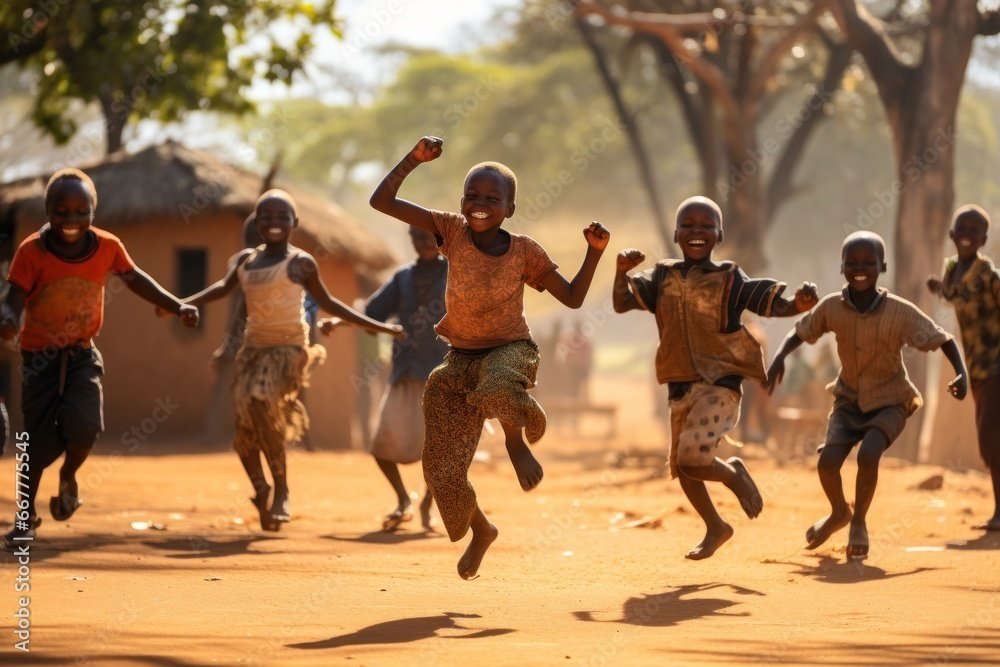
Africa is poised for significant population growth, expected to surge from approximately 1.4 billion to 2.5 billion by 2050. With nearly 60 percent of its populace under the age of 25, Africa stands out as the ‘youngest continent’. This demographic presents an unparalleled opportunity for economic advancement. However, realizing this potential necessitates substantial investments in education and skills development. Recognizing the urgency of addressing Africa’s education and skills gap, the African Union has wisely designated education and skilling as the focal theme for 2024.
Regrettably, the current state of Africa’s education sector paints a concerning picture. The COVID-19 pandemic exacerbated existing weaknesses, disrupting education systems across the continent due to sudden lockdowns and school closures. Thousands of children were forced out of school, resulting in significant learning setbacks. Presently, around 20 percent of primary-school-age children and 58 percent of upper-primary-school-age children in Sub-Saharan Africa are out of school. This issue is particularly pronounced in countries like South Sudan, Djibouti, Sudan, Eritrea, Mali, and Niger, where primary school-age dropout rates are alarmingly high.
Moreover, there are profound concerns regarding educational inequity. Children from the poorest quintile receive disproportionately less public spending on education, exacerbating disparities. Gender inequality further compounds these issues, with fewer girls accessing higher education and higher dropout rates among female students at the secondary level.
Beyond accessibility, the quality of education is another pressing concern. A significant proportion of children fail to attain basic literacy and numeracy skills, indicating systemic shortcomings. The shortage of trained teachers exacerbates this challenge, with teacher training rates declining steadily since 2000.
Compounding these issues are constrained government budgets, high debt burdens, and stagnant aid flows, posing formidable obstacles to achieving Sustainable Development Goal 4 of universal access to quality education. To meet this objective, both public and private expenditures on education would need to double by 2030, according to International Monetary Fund estimates. However, Sub-Saharan Africa’s public expenditure on education remains below the world average, necessitating increased investment.
In this context, India emerges as a potential partner for Africa’s educational endeavors. India’s development partnership program, grounded in principles of shared prosperity, has long emphasized education and capacity building. The Indian Technical and Economic Cooperation Programme (ITEC) and various scholarship programs have benefited students from developing countries, including those in Africa. Indian initiatives like the PAN-African e-Network and educational institution collaborations demonstrate India’s commitment to African development.
While commendable, there remains untapped potential for deeper collaboration, particularly in areas like teacher training, pedagogy, and curriculum development. Indian expertise can significantly contribute to improving education quality at all levels, complementing African efforts. The exchange of insights and experiences between India and Africa should be reciprocal, fostering mutual learning and enhancing both regions’ education systems.