
CBSE Cancels Class 12 Board Exams in Several Middle East Countries Amid Security Concerns
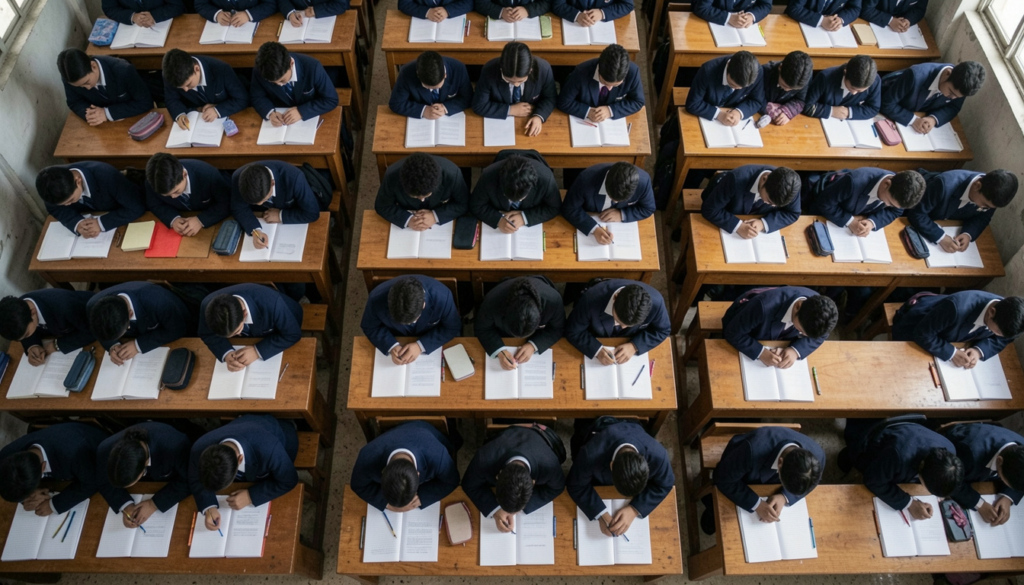
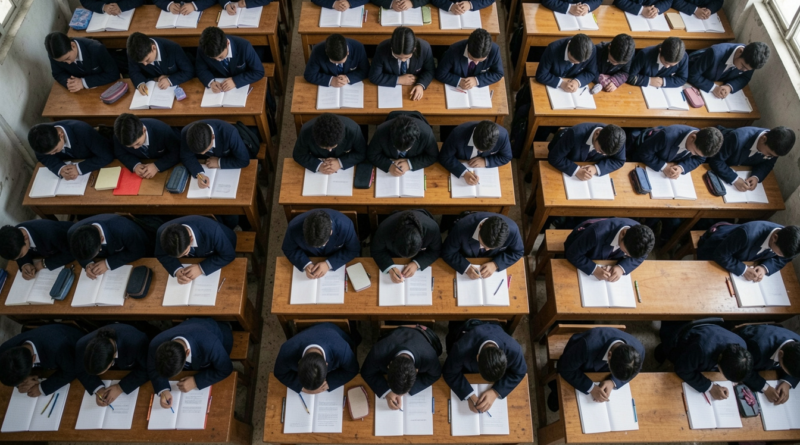
In a significant development affecting thousands of Indian students studying abroad, the Central Board of Secondary Education (CBSE) has cancelled the remaining Class 12 board examinations in several Middle Eastern countries for the 2026 academic session. The decision comes amid rising geopolitical tensions and security concerns in parts of West Asia, prompting authorities to prioritize the safety of students, teachers, and examination staff.
The cancellation applies to CBSE-affiliated schools located in seven countries across the Gulf and West Asia—the United Arab Emirates, Saudi Arabia, Qatar, Oman, Kuwait, Bahrain, and Iran. Thousands of students enrolled in Indian schools across these countries were scheduled to appear for the remaining board examination papers in March and April.
The board has announced that an alternative evaluation method will soon be formulated to ensure that students are not academically disadvantaged because of circumstances beyond their control.
Escalating Regional Tensions Force the Decision
The cancellation of examinations follows growing instability in parts of West Asia due to the escalating geopolitical situation involving Israel and Iran. The widening conflict and heightened security alerts in the region created logistical and safety challenges for the conduct of large-scale public examinations.
Initially, CBSE had postponed several examination papers scheduled earlier in March, hoping that conditions would stabilize. However, as tensions continued to rise and uncertainty persisted, the board decided that conducting the examinations safely across all centres would be difficult.
In an official communication to schools, the board clarified that all remaining examinations scheduled between mid-March and early April would be cancelled for schools located in the affected countries.
Education officials emphasized that the decision was taken after careful consultation with schools, local authorities, and diplomatic missions, with student safety emerging as the foremost priority.
A Large Indian Student Community Affected
The decision affects a substantial number of students studying in Indian schools across the Gulf region. The Middle East hosts one of the largest overseas communities of Indian expatriates, many of whom prefer to enroll their children in schools affiliated with CBSE so that they can remain connected to the Indian education system.
Cities such as Dubai, Abu Dhabi, Doha, Muscat, and Riyadh are home to numerous CBSE-affiliated schools that serve the educational needs of the Indian diaspora. These schools follow the same curriculum and examination schedule as institutions in India, enabling students to pursue higher education opportunities either in India or abroad.
For many of these students, the Class 12 board examination represents a crucial academic milestone. The results often determine admission prospects in universities and professional courses, making the sudden cancellation of examinations a matter of concern for students and parents alike.
However, school administrators have welcomed the board’s decision to prioritize safety while assuring students that the board will soon clarify the evaluation process.
Alternative Evaluation System Expected
CBSE has stated that a special evaluation formula will be announced shortly to assess the performance of students whose examinations have been cancelled. While the board has not yet revealed the exact method, education experts believe it may draw upon precedents established during the COVID-19 pandemic.
In 2021, when board examinations across India were cancelled due to the public health crisis, CBSE introduced an alternative assessment policy based on a combination of internal assessments, practical examination marks, and previous academic records.
A similar framework may be adopted for students in the Middle East this year. Possible components of the evaluation process could include:
- Marks obtained in school-based internal assessments
- Practical examination scores
- Pre-board examination performance
- Past academic records
Such a system would allow the board to generate final results while maintaining a degree of fairness and academic credibility.
Concerns Among Students and Parents
Despite the board’s assurance, the sudden cancellation of examinations has created a sense of uncertainty among many students preparing for university admissions. For students planning to apply to higher education institutions in India or abroad, board examination results play a crucial role in determining eligibility and merit rankings.
Parents’ associations and school managements have urged the board to ensure that the evaluation formula is transparent, balanced, and acceptable to universities worldwide. Many families are also concerned about the timing of the results, as delays could affect admission deadlines.
Education experts, however, point out that CBSE has handled similar situations before and is likely to develop a carefully calibrated evaluation framework that protects the interests of students.
A Reflection of Global Uncertainty
The disruption of board examinations in the Middle East illustrates how global geopolitical events can directly impact educational systems. For expatriate communities, especially those spread across politically sensitive regions, education can sometimes be affected by developments far beyond the classroom.
The presence of thousands of Indian students in CBSE-affiliated schools abroad reflects the growing international reach of the Indian education system. However, it also means that Indian boards must sometimes respond to complex international situations when conducting examinations overseas.
The current episode highlights the need for education authorities to develop flexible and resilient examination policies that can respond quickly to unforeseen disruptions.
Looking Ahead
As students await further announcements from CBSE, schools across the Gulf region have advised them to remain calm and continue focusing on their academic preparations. Many institutions have already begun collecting internal assessment data in anticipation of the board’s evaluation policy.
Once the assessment framework is finalized, the board is expected to process results swiftly so that students can proceed with their higher education plans without significant delay.
For thousands of young learners in the Middle East, the episode serves as a reminder that education systems must increasingly adapt to an interconnected and sometimes unpredictable world. While the cancellation of examinations may have created temporary uncertainty, the board’s forthcoming evaluation policy will ultimately determine how smoothly these students transition to the next stage of their academic journey.