
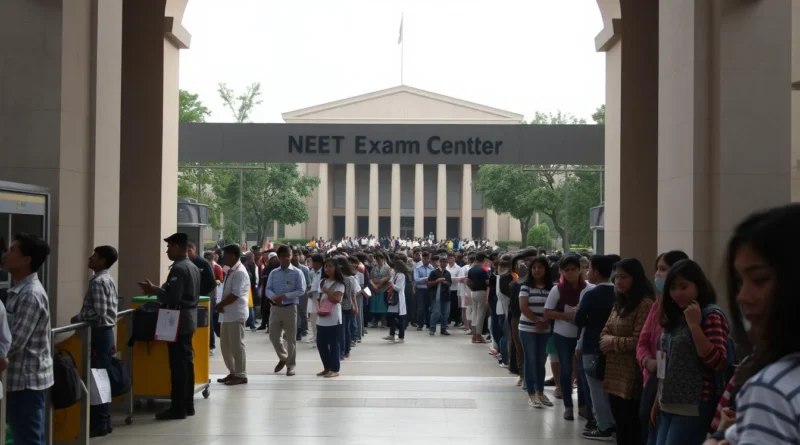
CBI Expands NEET-UG Paper Leak Investigation With Arrest of Pune Lecturer
Central Bureau of Investigation has intensified its probe into the NEET-UG paper leak case with the arrest of a lecturer from Pune. The investigation continues to examine alleged irregularities linked to the national medical entrance examination.Central Bureau of Investigation has expanded its investigation into the alleged NEET-UG paper leak case with the arrest of a lecturer from Pune, adding another major development to one of India’s most closely watched examination controversies.
The arrest is part of the ongoing investigation into alleged irregularities connected with the National Eligibility cum Entrance Test for Undergraduate medical admissions (NEET-UG), a national-level examination conducted for admission to medical and related courses across India.
The case has raised serious concerns regarding examination security, fairness, and the integrity of large-scale competitive testing systems.
Investigation Continues to Expand
According to officials, the latest arrest was made after the agency reportedly uncovered additional evidence linking individuals associated with educational and coaching networks to the alleged leak operation.
The investigation by Central Bureau of Investigation has already involved multiple arrests, questioning of suspects, examination of digital records, financial transactions, and scrutiny of communication networks.
Authorities are investigating whether organised groups may have attempted to illegally access examination material and distribute it to candidates before the test.
The agency is also examining possible interstate connections and the role of intermediaries involved in facilitating alleged malpractice.
What Is NEET-UG?
NEET-UG is India’s primary entrance examination for undergraduate medical admissions.
The examination is conducted by the National Testing Agency for admission to:
- MBBS programmes
- BDS courses
- AYUSH programmes
- Veterinary and allied medical courses in some institutions
Every year, millions of students across India appear for the examination, making it one of the country’s largest and most competitive entrance tests.
Because medical admissions are highly competitive, any allegations of paper leaks or unfair practices generate intense public concern.
Impact on Students and Public Trust
The alleged paper leak controversy has deeply affected students, parents, educators, and coaching communities.
Many candidates who spent years preparing for the examination expressed concerns regarding:
- Fairness of evaluation
- Examination transparency
- Equal opportunity
- Psychological stress
- Credibility of competitive exams
Education experts note that trust in examination systems is essential for maintaining confidence in merit-based admissions.
Any compromise in examination security can have wide-ranging consequences not only for individual candidates but also for the broader credibility of educational institutions and recruitment systems.
Examination Security Under Scrutiny
The NEET-UG controversy has renewed debate regarding the security of large-scale entrance examinations conducted across India.
Experts have called for stronger safeguards including:
- Encrypted digital paper transmission systems
- Improved centre monitoring
- Artificial intelligence-based surveillance
- Stronger cybersecurity infrastructure
- Enhanced background verification for examination personnel
- Real-time tracking of confidential materials
There is also increasing discussion about balancing technological efficiency with robust human oversight in examination management systems.
Role of the CBI
The involvement of Central Bureau of Investigation indicates the seriousness of the allegations and the complexity of the investigation.
The agency is responsible for examining:
- Source of the alleged leak
- Financial transactions
- Organised networks
- Communication channels
- Possible institutional involvement
- Candidate connections
Investigators are reportedly coordinating with state police agencies and cybercrime units as part of the probe.
Growing Pressure for Examination Reforms
The controversy has intensified demands for broader examination reforms in India.
Education analysts argue that the increasing scale of national entrance tests requires stronger systems for:
- Confidentiality management
- Candidate authentication
- Digital security
- Monitoring and accountability
- Grievance redressal
- Transparency in investigation procedures
The issue has also reignited discussions about the immense pressure associated with high-stakes entrance examinations in India’s education system.
Challenges of High-Stakes Competitive Exams
Examinations such as NEET-UG carry enormous academic and emotional significance because they determine access to highly limited seats in medical colleges.
As a result:
- Competition levels are extremely high
- Coaching industries expand rapidly
- Financial pressures increase for families
- Psychological stress among students rises
Experts believe such environments can create vulnerabilities that unethical networks may attempt to exploit.
At the same time, educators emphasise that the overwhelming majority of students appear for examinations honestly and ethically after years of rigorous preparation.
Digital Forensics and Investigation Methods
Modern examination leak investigations increasingly rely on digital forensics and cyber analysis.
Authorities are reportedly analysing:
- Mobile phone records
- Messaging applications
- Financial transfers
- Electronic devices
- Cloud data and communication trails
Experts note that technology now plays a dual role — while digital systems improve examination efficiency, they also create new cybersecurity challenges requiring constant upgrading of safeguards.
Importance of Maintaining Examination Integrity
Education specialists stress that preserving the credibility of competitive examinations is critical for social trust and merit-based opportunity.
India’s higher education and professional admission systems depend heavily on large-scale standardised examinations.
If public confidence weakens, it may affect:
- Student morale
- Institutional reputation
- Fairness perceptions
- Long-term educational credibility
Therefore, transparent investigations and timely corrective measures are considered essential.
Wider National Debate
The NEET-UG controversy has triggered broader national discussions regarding:
- Examination stress
- Coaching culture
- Admission reforms
- Digital governance
- Accountability mechanisms
Many educationists argue that while technological and administrative reforms are necessary, long-term improvements also require reducing excessive dependence on single high-stakes examinations.
Investigation Still Ongoing
The arrest of the Pune lecturer marks another significant development in the expanding investigation, but authorities have indicated that the probe is still ongoing.
Central Bureau of Investigation is expected to continue examining additional links, financial trails, and possible institutional connections related to the alleged leak network.
As the investigation progresses, students and families across the country continue to closely follow developments surrounding one of India’s most important and controversial entrance examination cases.