
Academic Bank of Credit (ABC): The Concept, Significance and Procedure
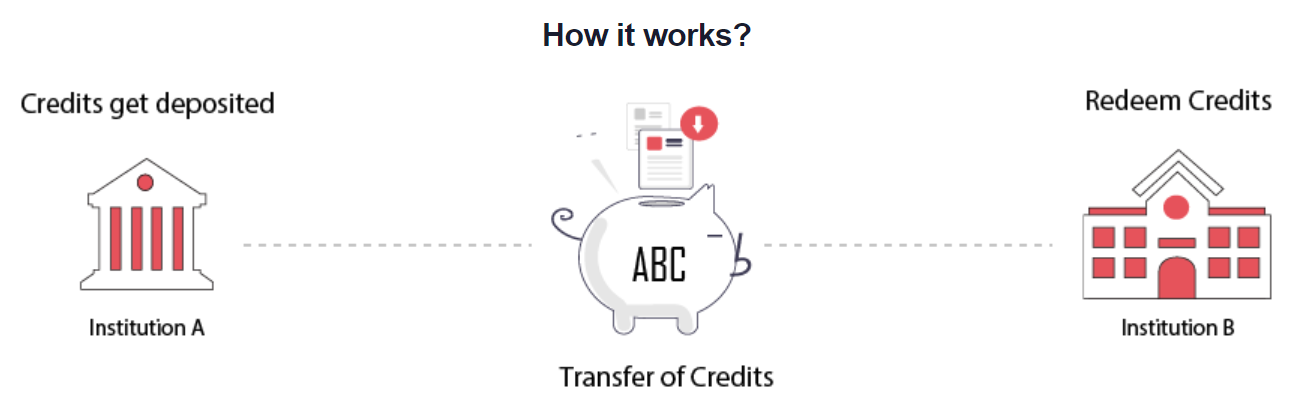
The concept of the Academic Bank of Credit (ABC) can be traced back to various initiatives and discussions within the realm of education, particularly in the context of efforts to reform and modernize traditional credentialing systems. While it’s challenging to attribute the invention of the ABC to a single individual or organization, the idea has evolved over time through the contributions of educators, policymakers, and researchers around the world.
One early precursor to the ABC is the concept of credit transfer and recognition, which has long been a topic of interest in higher education. The idea that students should receive academic credit for learning acquired outside the traditional classroom setting, such as through work experience or military training, dates back several decades. Institutions and accreditation bodies have explored mechanisms for evaluating and awarding credit for prior learning, often through processes like portfolio assessment or standardized exams.
The ABC concept gained momentum as technological advancements facilitated the digitization and standardization of educational records. The rise of online learning platforms, digital badges, and e-portfolios provided new opportunities for storing and validating academic achievements in a digital format. This laid the groundwork for the development of a centralized platform like the ABC, where students could accumulate and showcase their academic credits from various sources.
In recent years, organizations such as the European Commission and UNESCO have advocated for the establishment of systems similar to the ABC to promote mobility and lifelong learning. Projects like the European Credit Transfer and Accumulation System (ECTS) and the European Qualifications Framework (EQF) have contributed to the development of common frameworks for credit transfer and recognition across Europe.
Similarly, discussions surrounding competency-based education and micro-credentials have fueled interest in alternative approaches to credentialing that recognize skills and competencies acquired through non-traditional means. Initiatives like the Open Badges movement, which advocates for the use of digital badges to recognize learning achievements, have influenced the development of the ABC concept.
National Education Policy (NEP) 2020 and recommendation of ABC
The National Education Policy (NEP) 2020, introduced by the Government of India, is a comprehensive framework aimed at transforming the country’s education system to meet the demands of the 21st century. One of the key objectives of the NEP 2020 is to promote flexibility, innovation, and integration of technology in education, aligning closely with the principles underlying the concept of the Academic Bank of Credit (ABC).
NEP 2020 emphasizes the importance of promoting multiple pathways to learning and recognizing the value of diverse learning experiences beyond traditional academic settings. It advocates for the integration of vocational education, internships, apprenticeships, and other forms of experiential learning into the mainstream education system, enabling students to acquire practical skills and competencies relevant to the workforce.
The Academic Bank of Credit (ABC) aligns closely with the vision outlined in NEP 2020 by providing a standardized platform for storing and managing academic credits earned from various learning experiences. By recognizing learning irrespective of where and how it occurs, the ABC promotes flexibility and accessibility in education, allowing students to design personalized learning pathways aligned with their interests, goals, and aspirations.
Moreover, the ABC facilitates credit transfer and mobility within and across educational institutions, promoting seamless progression and recognition of learning achievements. This supports NEP 2020’s objectives of promoting equity and inclusivity in education by removing barriers to access and enabling learners to leverage their prior learning experiences to advance their educational journey.
Furthermore, NEP 2020 emphasizes the importance of leveraging technology to enhance the quality and efficiency of education. The implementation of the ABC relies heavily on digital platforms and technological infrastructure for credit storage, retrieval, and validation, thereby aligning with NEP 2020’s emphasis on harnessing the potential of technology to promote innovation and excellence in education.
Advantages of the Academic Bank of Credit
- Flexibility and Personalization One of the primary advantages of the ABC is its flexibility, allowing students to design their educational journeys according to their unique interests, preferences, and schedules. Students can earn credits from a wide range of sources and customize their learning pathways to align with their career goals.
-
Accessibility
By recognizing learning from diverse sources, including online courses, workshops, and real-world experiences, the ABC promotes accessibility to education for individuals who may not have access to traditional educational institutions due to geographic, financial, or other constraints.
-
Efficiency
The ABC streamlines the process of credit accumulation and transfer, reducing administrative burdens for both students and educational institutions. Instead of repeating coursework, students can leverage previously earned credits to fast-track their educational progression, ultimately saving time and resources.
-
Credential Portability
With credits stored in a centralized database, students can easily transfer their academic credentials across institutions, both domestically and internationally. This enhances the mobility of learners and promotes greater collaboration and exchange within the global education community.
-
Learning
By recognizing and valuing learning beyond traditional academic settings, the ABC encourages individuals to pursue lifelong learning opportunities and continuously upgrade their skills in response to changing industry demands and technological advancements.
Procedure
Academic Bank of Credits has been established on the lines of the National Academic Depository (NAD), in the sense, NAD is the backbone of ABC, where the students’ academic data are held and academic awards are stored (i.e. storehouse of academic awards). Despite the fact that ABC enables students to register or commence credit transfer, the final outcomes of credit redemption and issuance of certificates, as well as the compilation of award records, are administered by academic institutions via the NAD Platform. Hence being the owner of academic awards, Academic Institutions must mandatorily register themselves under ABC via NAD.
The idea of the National Academic Depository (NAD) emerged from the Government of
India as an attempt to create an online repository for students to access all their academic awards at ease. NAD seeks to provide a legitimate and user-friendly method for online submission, verification, and validation of academic awards granted by various educational institutions. It would significantly, verification, and validation of academic awards granted by various educational institutions. It would significantly minimize fraudulent activates such as certificate forgery and mark-sheet forgery by allowing online verifications of the same.The DigiLocker NAD platform is a 24X7 online storehouse for all academic awards. such as certificates, diplomas, degress, mark sheets, and so on, that have been officially digitized and registered by academic institutions/boards/eligibility assessment bodies. It enables simple access to and retrieval of an academic award and confirms and assures its validity and secure preservation.
The National Academic Depository (NAD) is a digital education portal that allows academic institutions to upload award data and students to view their academic awards. Academic institutions to upload award data and students to view their academic awards. Academic institutions submit student data to the site, and students, after registration, can pull their certificates and documents to their individual DigiLocker account.
The NAD platform provides the establishment of a variety of roles, including creating student and academic accounts, the preparation of student data according to a standard certificate template, and the publication of year/course-specific data. The primary objective of this guide is to give step-by-step instructions to academic institutions and educate them on the registration process, data preparation, and all of the features of the NAD application until the publication of the awards.
conclusion
In conclusion, the Academic Bank of Credit (ABC) is closely aligned with the objectives outlined in India’s National Education Policy (NEP) 2020, particularly in promoting flexibility, accessibility, and innovation in education. By providing a standardized platform for recognizing and storing academic credits earned from diverse learning experiences, the ABC contributes to the realization of NEP 2020’s vision of transforming India’s education system to meet the needs of the 21st century