
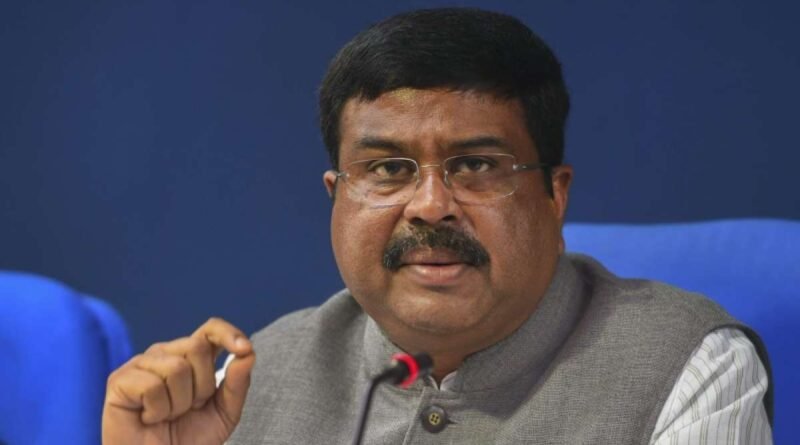
Education Ministry Clarifies VBSA Bill Will Not Change Status of State-Affiliated Universities
The Ministry of Education has stated that the proposed VBSA Bill will not affect the existing status or autonomy of state-affiliated universities. The clarification comes amid discussions over higher education reforms.
Ministry of Education has clarified that the proposed VBSA Bill will not alter the legal or administrative status of state-affiliated universities, addressing concerns raised by sections of the academic community and state institutions regarding the implications of the legislation.
The ministry stated that the bill is not intended to interfere with the autonomy, affiliation structure, or operational identity of universities currently functioning under state governments.
The clarification comes amid growing discussion around higher education reforms and evolving governance frameworks within India’s university system.
Concerns Raised by Universities and Academicians
The proposed bill had reportedly triggered questions among educators, university administrators, and policy observers regarding whether state-affiliated institutions could face changes in governance, regulation, or academic functioning.
Some concerns reportedly included:
- Possible centralisation of authority
- Changes in affiliation systems
- Impact on institutional autonomy
- Administrative restructuring
- Regulatory overlap
In response, officials from Ministry of Education emphasised that the legislation would not alter the constitutional and administrative status of state universities.
Focus on Coordination Rather Than Structural Change
According to officials, the proposed framework is aimed more at improving coordination, quality enhancement, and institutional support mechanisms rather than replacing or restructuring state-controlled higher education systems.
Education experts note that India’s higher education landscape is highly diverse, consisting of:
- Central universities
- State universities
- Deemed universities
- Private universities
- Autonomous colleges
- Open universities
Any major structural changes affecting state-affiliated institutions would require extensive consultation and legal processes involving state governments.
Importance of State Universities in India
State universities form the backbone of India’s higher education system in terms of student enrolment and regional educational access.
They play a major role in:
- Undergraduate education
- Regional research ecosystems
- Teacher education
- Professional and vocational courses
- Social inclusion and local accessibility
Many state-affiliated colleges and universities cater to students from rural, semi-urban, and economically weaker backgrounds.
Education analysts point out that reforms affecting these institutions often generate strong public and political interest because of their scale and social impact.
Autonomy and Academic Governance
Institutional autonomy remains one of the most debated issues in Indian higher education policy.
Universities often seek greater flexibility in areas such as:
- Curriculum design
- Research priorities
- Faculty recruitment
- Examination reforms
- International collaborations
- Multidisciplinary programmes
At the same time, governments and regulatory agencies emphasise accountability, quality assurance, and standardisation.
Experts believe balancing autonomy with regulation remains one of the central challenges in higher education governance.
Context of Higher Education Reforms
The clarification regarding the VBSA Bill comes at a time when India is implementing broader reforms under the National Education Policy (NEP) 2020.
The policy proposes significant transformations including:
- Multidisciplinary universities
- Flexible academic structures
- Research-focused institutions
- Digital and online learning expansion
- Internationalisation of higher education
- Institutional restructuring over time
As reforms progress, concerns and debates regarding governance, regulation, and institutional identity have become increasingly common.
Need for Consultation With States
Education remains a subject involving both central and state participation within India’s federal framework.
Experts argue that successful higher education reforms require:
- Coordination between Centre and states
- Institutional consultation
- Faculty participation
- Student engagement
- Administrative clarity
Several educationists have emphasised that communication and transparency are essential to avoid confusion regarding legislative and policy initiatives.
Expanding Demand for Higher Education
India’s higher education sector is currently experiencing rapid expansion due to:
- Increasing student enrolment
- Growing demand for postgraduate education
- Skill-oriented learning needs
- Digital education growth
- Research and innovation initiatives
As universities evolve to meet changing economic and technological demands, governance frameworks are also being revisited.
Experts believe future reforms must balance accessibility, affordability, quality, and institutional independence.
Digitalisation and Administrative Reform
The ministry has also been encouraging universities to adopt digital governance systems for:
- Admissions
- Examinations
- Academic records
- Research management
- Student services
Technology-driven reforms are increasingly viewed as important for improving transparency and administrative efficiency across institutions.
However, experts caution that digital transformation should complement rather than overshadow academic priorities and institutional diversity.
Academic Community Seeks Clarity
Following the ministry’s clarification, many academicians and university officials are expected to continue examining the detailed provisions of the proposed legislation.
Policy observers note that higher education reforms often require careful interpretation because of the complexity of India’s university ecosystem.
Experts believe open dialogue between policymakers, universities, and state authorities will remain essential as discussions around educational legislation continue.
No Change to Existing University Status
The latest statement from Ministry of Education aims to reassure universities and stakeholders that the proposed VBSA Bill does not seek to alter the constitutional or administrative status of state-affiliated universities.
As debates on higher education reform continue, the ministry’s clarification is likely to play an important role in addressing concerns related to institutional autonomy and governance structures within India’s evolving education system.