
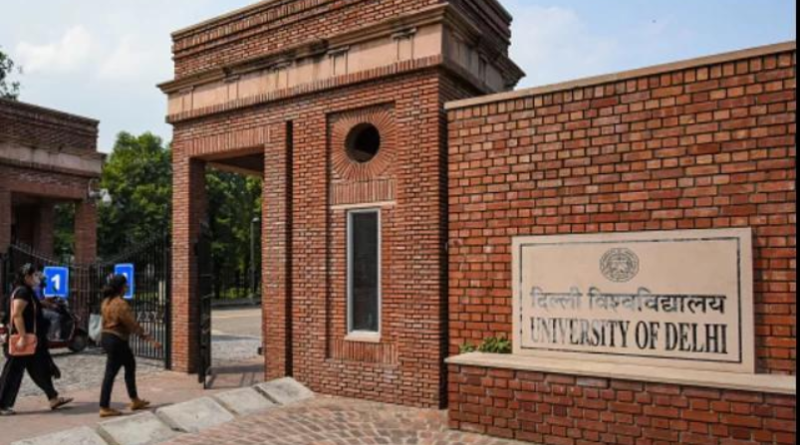
Delhi University Approves One-Year PG Courses, Allows MOOC Credits Amid Faculty Concerns
Delhi University approves one-year PG courses under NEP 2020 and allows MOOC credits. Faculty raise concerns over online learning and academic impact.Major Academic Reform at Delhi University
The University of Delhi (DU) has approved a significant set of academic reforms, including the introduction of one-year postgraduate (PG) programmes and allowing students to earn credits through online courses (MOOCs).
These decisions were taken during a recent Academic Council meeting and are aligned with the vision of the National Education Policy 2020, which emphasizes flexibility, multidisciplinary learning, and global integration.
One-Year PG Courses: What It Means
One of the most important changes is the introduction of one-year postgraduate programmes, especially for students completing the four-year undergraduate programme (FYUP).
- Based on the Postgraduate Curriculum Framework (PGCF) 2024
- Applicable across multiple disciplines like Humanities, Languages, Sciences, and Journalism
- Designed for students who complete the fourth year of UG with research
This aligns with NEP 2020’s structure, where a 4-year UG + 1-year PG pathway replaces the traditional 3+2 model.
MOOC Credits Approved
Another key decision is allowing students to earn up to 5% of total academic credits through SWAYAM and other MOOC platforms.
- Applies to both undergraduate and postgraduate courses
- Aims to provide flexibility and access to diverse learning resources
- Encourages students to explore courses beyond their university curriculum
University officials argue that this move will enhance learning opportunities and expose students to global content and interdisciplinary knowledge.
Faculty Dissent and Concerns
Despite these reforms, the decisions have sparked strong opposition from sections of the faculty.
Key concerns raised include:
- Possible dilution of classroom teaching quality
- Risk of over-reliance on online learning platforms
- Fear of weakening the teacher-student interaction
- Concerns over digital divide among students
Some faculty members also alleged that the discussion process was cut short during the meeting, limiting meaningful debate on these critical issues.
Additional Reform: Semester Away Programme
DU has also approved a Semester Away Programme (SAP):
- Students can study one semester at a foreign university
- Credits earned abroad will count toward their degree
- Aims to promote global exposure and academic mobility
However, concerns were raised regarding costs and accessibility, especially for students from diverse socio-economic backgrounds.
A Shift in Higher Education
These reforms indicate a broader transformation in Indian higher education:
- From rigid degree structures → flexible pathways
- From classroom-only learning → blended digital learning
- From local exposure → global academic integration
The changes aim to make higher education more adaptive, skill-oriented, and internationally aligned.
What It Means for Students
Opportunities
- Faster completion of postgraduate degrees
- Access to global courses via MOOCs
- International exposure through exchange programmes
Challenges
- Need for self-discipline in online learning
- Possible inequality due to digital access issues
- Adjustment to a new academic structure
Final Insight
The University of Delhi’s decision reflects a bold step toward implementing the NEP 2020 vision. However, it also highlights an important truth:
Educational reform must balance innovation with inclusivity and academic depth.
While students gain flexibility and global exposure, the concerns raised by faculty remind us that quality, equity, and dialogue remain central to meaningful education reform.