
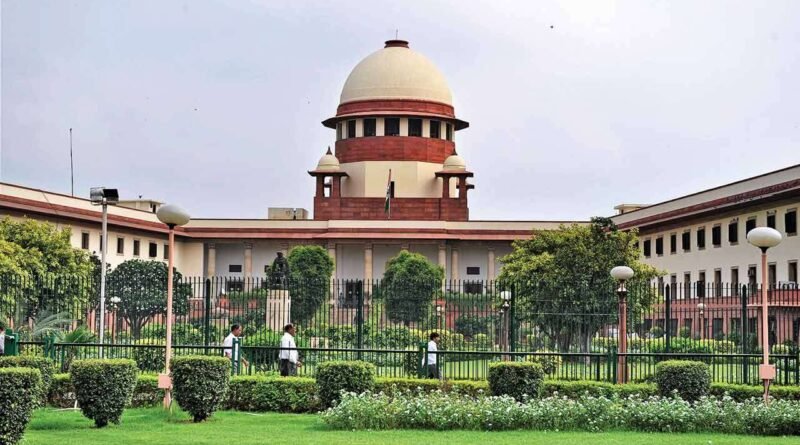
Supreme Court: Private Medical Colleges Cannot Be Forced to Charge Fees at Government College Rates
The Supreme Court of India has observed that private medical colleges cannot be compelled to charge MBBS fees equivalent to those of government institutions, highlighting differences in funding models and operational structures.The Supreme Court of India has observed that private medical colleges cannot be expected to charge tuition fees at the same level as government-run institutions, noting the fundamental differences in their financial and administrative structures.
The court made the observation while hearing matters related to fee regulation and admissions in private medical colleges, an issue that has long been debated by students, parents, educational institutions, and policymakers.
Court Highlights Difference Between Public and Private Institutions
During the proceedings, the Supreme Court noted that government medical colleges receive substantial public funding and budgetary support, enabling them to offer education at significantly lower costs.
Private colleges, on the other hand, largely depend on tuition fees and institutional resources to meet expenses related to:
- Faculty salaries
- Infrastructure development
- Hospital facilities
- Research activities
- Equipment and laboratory maintenance
- Regulatory compliance
The court observed that these differences must be considered while determining fee structures.
Debate Over MBBS Fees
Medical education fees have remained a major concern for students across India. While government medical colleges offer relatively affordable education, tuition fees in many private institutions are substantially higher.
The issue has generated ongoing debate regarding:
- Affordability of medical education
- Access for economically weaker students
- Fee regulation mechanisms
- Institutional autonomy
- Quality of medical infrastructure
Balancing Accessibility and Sustainability
Legal and education experts note that policymakers face the challenge of balancing two competing objectives:
- Ensuring affordable medical education for students
- Allowing private institutions to remain financially sustainable
The Supreme Court’s observations reflect the complexity of regulating fees in a sector where institutions operate under different funding models.
Growing Demand for Medical Seats
The discussion comes amid rising demand for medical education in India. Every year, lakhs of candidates appear for the National Eligibility cum Entrance Test (NEET-UG) seeking admission to MBBS programmes, while the number of available seats remains comparatively limited.
As a result, private medical colleges play a significant role in expanding the country’s medical education capacity.
Importance of Transparent Fee Regulation
Experts argue that while private institutions may not be expected to charge fees comparable to government colleges, fee structures should remain transparent, reasonable, and subject to appropriate regulatory oversight.
Many states have established fee regulatory committees to review and approve tuition charges in private professional institutions.
Implications for Students
The court’s observations may influence future discussions on medical education policy, fee regulation, and the role of private institutions in expanding healthcare education.
For students and parents, the ruling highlights the distinction between government-funded and privately funded medical colleges while reinforcing the broader debate over affordability, accessibility, and quality in medical education.
As India seeks to increase the number of doctors and healthcare professionals, the issue of balancing educational access with institutional sustainability is likely to remain a key policy challenge.